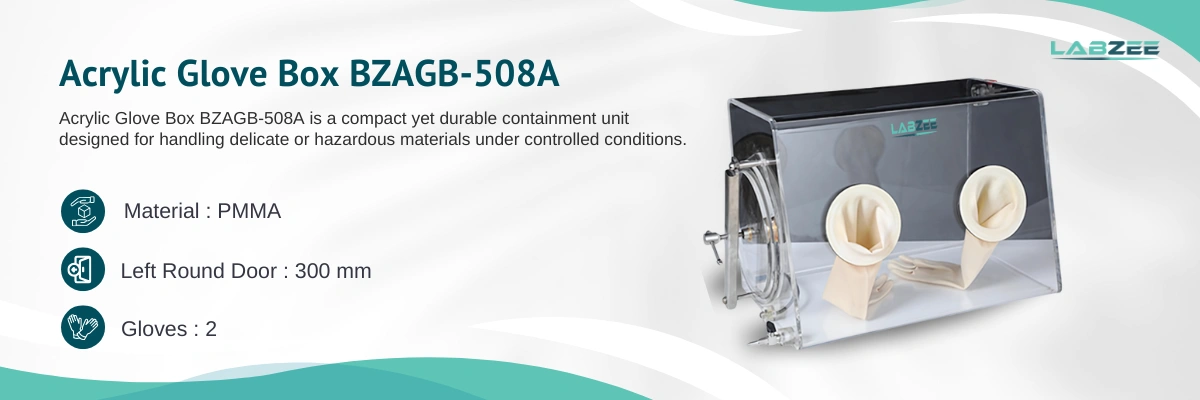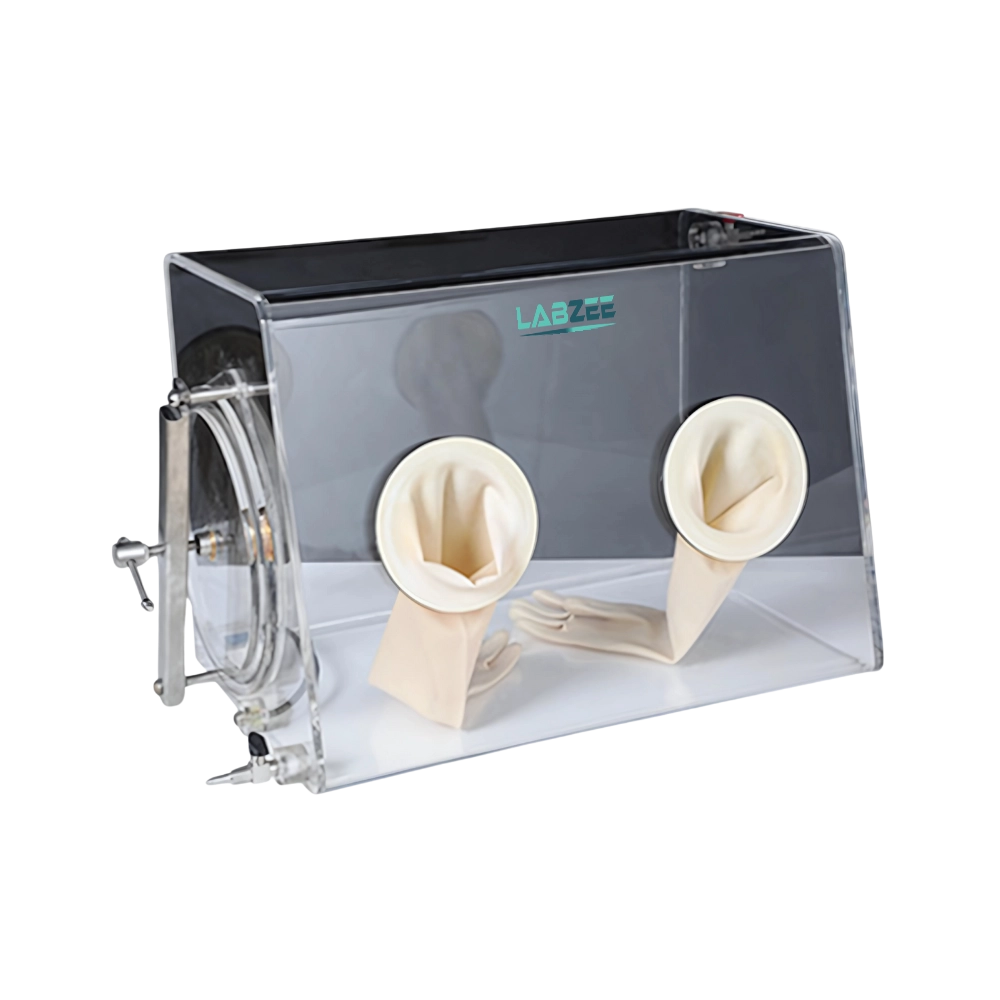
Acrylic Glove Box BZAGB-508A is a compact yet durable containment unit designed for handling delicate or hazardous materials under controlled conditions. This Glove Box has a main box size of 900 × 600 × 700 mm and built from 10 mm thick PMMA, it ensures a strong, transparent working chamber with minimal contamination risk. It offers effortless visibility and comfort through its dual glove ports and ergonomic door design. Its structure supports accurate and safe manipulation of samples, ideal for tasks requiring a stable, sealed workspace. Our Acrylic Glove Box BZAGB-508A is suitable for use in medical research, cleanroom assembly, material testing, and contamination-sensitive lab experiments.
| Main Box Dimension | 900 × 600 × 700 mm |
| Material | PMMA |
| PMMA Thickness | 10 mm |
| Left Round Door | 300 mm |
| Gloves | 2 |
| Transition Box | No |
| Package Size | 90 × 60 × 70 cm |
| Package Weight | 55 Kg |
Our Acrylic Glove Box BZAGB-508A is purpose-built for controlled lab processes involving sensitive compounds and sterile procedures. It is ideal for applications in cleanroom operations, research environments, and pharmaceutical sample analysis. Its compact size and reliability allow seamless integration into modern laboratories where precision and safety are non-negotiable.
Frequently Asked Questions
1: Can You Use the Acrylic Glove Box for 3D Printing Filament Storage?
Yes, the Acrylic Glove Box can be used to store 3D printing filaments in a dry, dust-free environment. Purging the chamber with an inert gas helps prevent moisture absorption. It keeps filaments like PLA or nylon in optimal condition. This is useful for high-quality printing results. It’s a smart solution for makers.
2: Is the Acrylic Glove Box Safe for Children to Use Under Supervision?
With adult supervision, older students can safely use the Acrylic Glove Box for educational activities. The clear structure allows teachers to monitor behavior and guide usage. It’s ideal for science demonstrations or protected chemical handling. Supervised use promotes safe lab habits. Always follow age-appropriate safety protocols.
3: How Do You Perform Leak Tests on the Acrylic Glove Box?
To test for leaks, fill the Acrylic Glove Box with an inert gas and use a pressure gauge or soap solution around the seals and valves. Look for bubbles or pressure drops. Leak tests should be done regularly, especially after glove or part replacements. It ensures the glove box is sealed and safe.
4: Can you Use Desiccants Inside the Acrylic Glove Box?
Yes, desiccants like silica gel can be placed inside the Acrylic Glove Box to absorb moisture. This is useful for experiments needing a dry environment. Desiccants should be monitored and replaced as needed. Combined with inert gas purging, it creates ultra-dry conditions. Use trays or holders to keep desiccants in place.
5: Is the Acrylic Glove Box Compatible with Analytical Instruments?
Some small analytical tools can be placed inside the Acrylic Glove Box for basic tests or sample preparation. Portable balances, pipettes, or meters may fit inside the chamber. For larger devices, external connections may be needed. Check dimensions before use. Compatibility depends on size and function of the instrument.
6: What Is an Acrylic Glove Box Used For?
An Acrylic Glove Box is used to create a sealed and controlled environment for conducting experiments. It helps isolate materials from air, moisture, dust, and contaminants. This makes it suitable for chemical, biological, or electronic research. Users can manipulate objects inside safely through attached gloves. It’s essential for clean and precise lab work.
7: What Materials Are Used in This Acrylic Glove Box?
The Acrylic Glove Box is made of clear, durable acrylic panels, providing high visibility and structural strength. It features latex gloves for hand access, which are soft and flexible. Gas inlet and outlet valves are made of stainless steel, offering durability and corrosion resistance. All materials are chosen for lab safety and reliability.
8: Is the Acrylic Glove Box Airtight?
Yes, the Acrylic Glove Box is designed to be airtight. The front door uses a sealing gasket and latches to prevent any air exchange with the outside. This ensures a stable atmosphere inside, which is crucial for sensitive tasks. Airtightness also protects both users and contents from contamination. It maintains the integrity of experiments.
9: How Do You Introduce Gas Into the Acrylic Glove Box?
Gas is introduced through the stainless steel inlet and outlet valves built into the Acrylic Glove Box. These valves allow you to purge the interior with inert gases like nitrogen or argon. This helps in creating a dry and oxygen-free environment. The process is straightforward and supports many types of scientific experiments. Pressure can be controlled safely.
10: Can the Acrylic Glove Box Be Used for UV Experiments?
Yes, the Acrylic Glove Box can support UV-based experiments. Its clear acrylic body allows limited UV transmission, which is useful for sterilization or polymer curing. However, compatibility depends on the wavelength of UV light used. It’s ideal for microbiology work or UV testing when used properly. Always follow safety guidelines when using UV light.