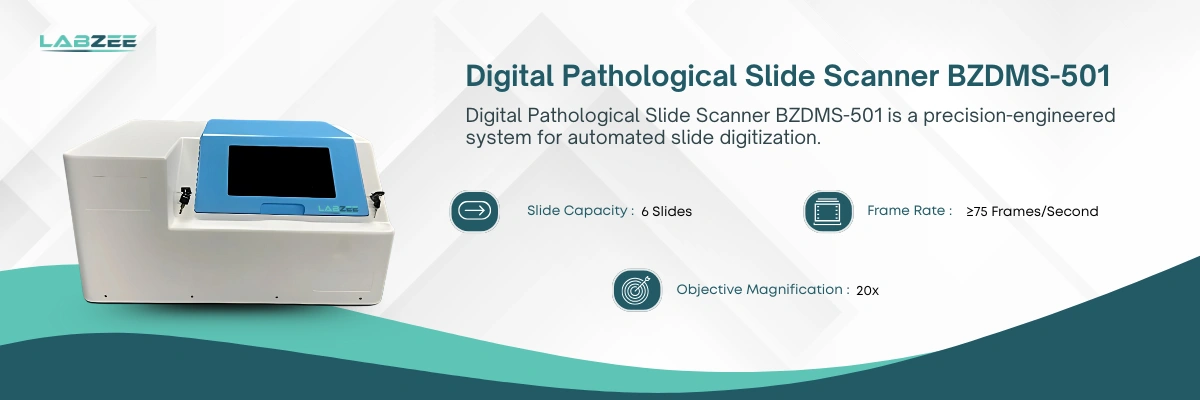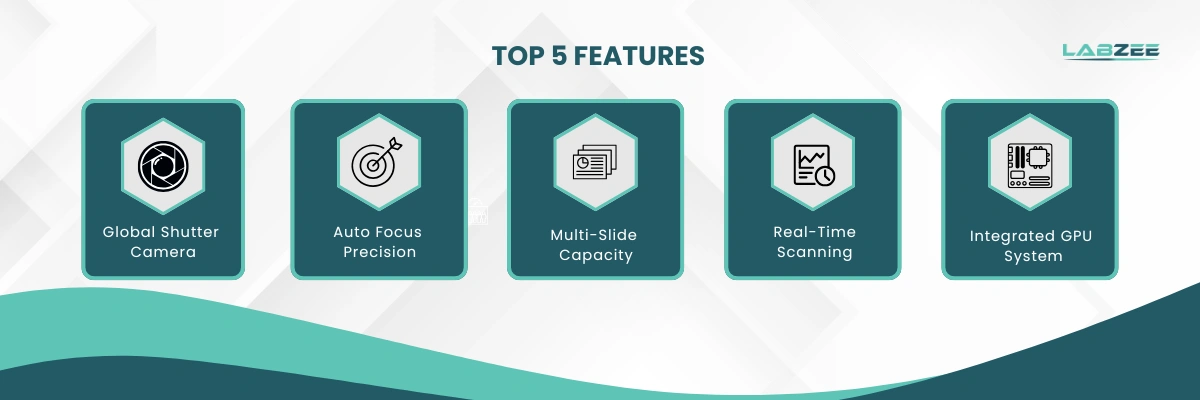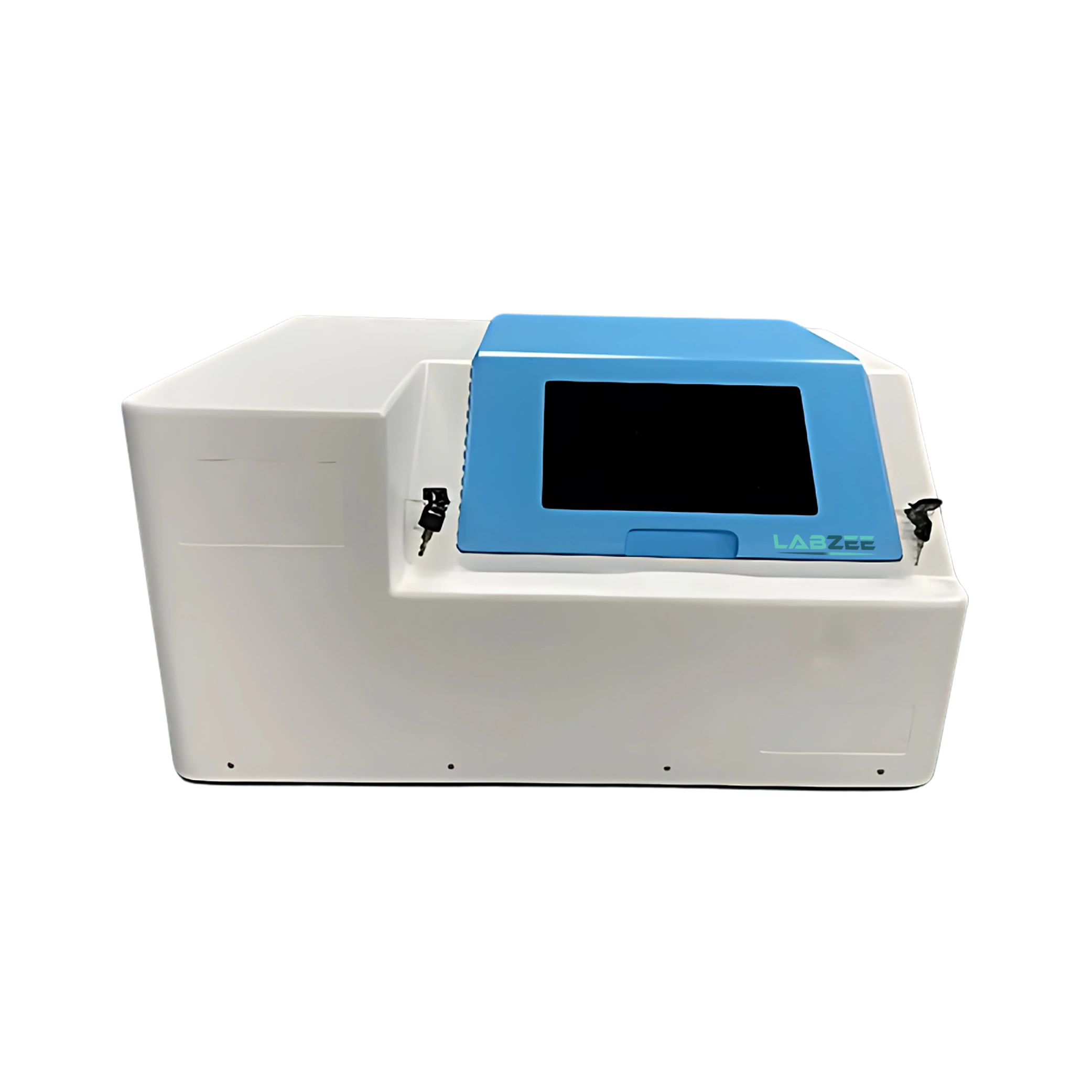
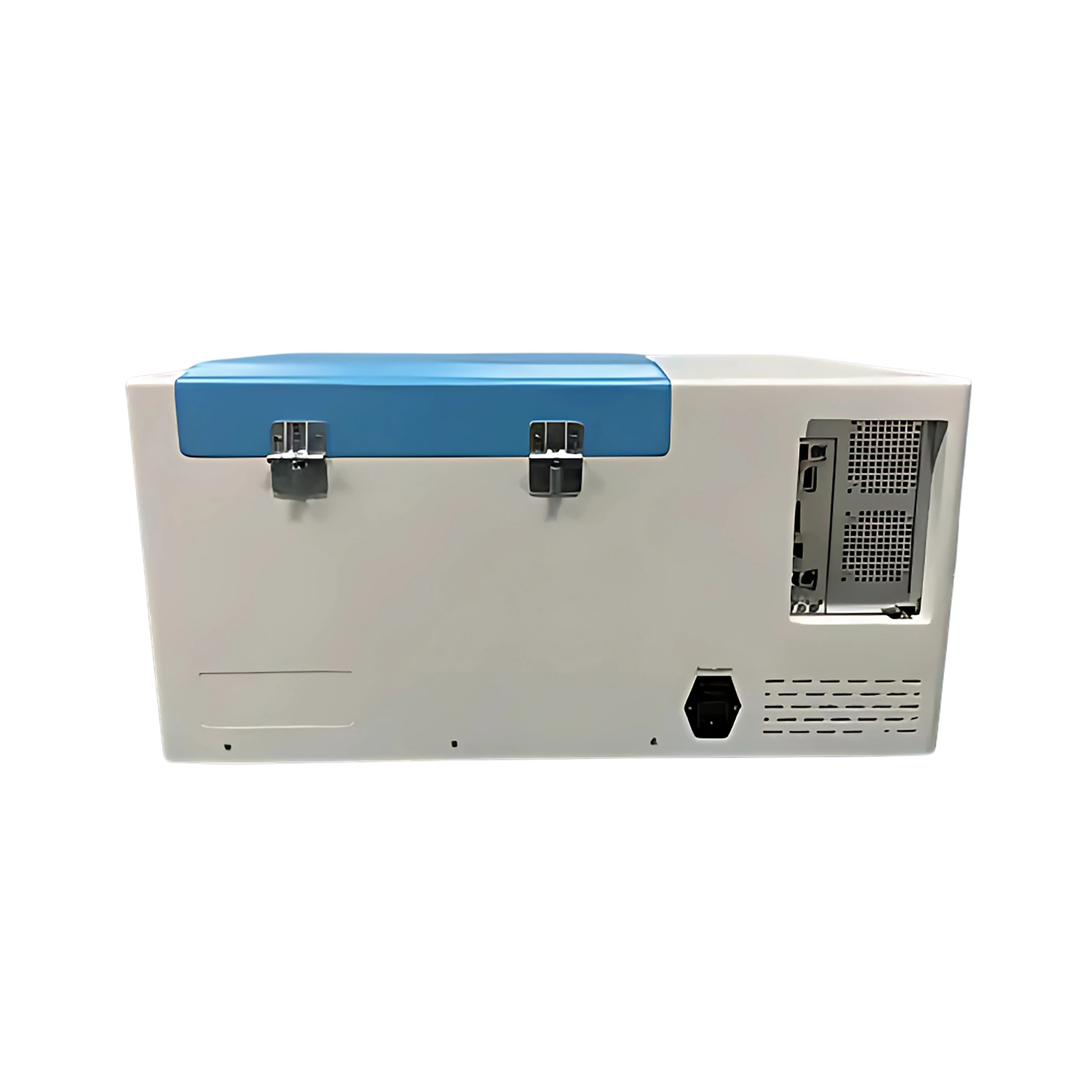
Digital Pathological Slide Scanner BZDMS-501 is a precision-engineered system for automated slide digitization. This slide scanner offers 20x objective magnification with a camera resolution of 3200×2200 using a 1” global shutter. It delivers reliable scan accuracy through advanced autofocus and image resolution designed for clinical precision. Its compact integration with embedded PC and real-time frame capture enables effortless image management. Our Digital Pathological Slide Scanner BZDMS-501 is ideal for automated smear analysis, digital microscopy, and high-throughput pathological screening applications only.
| Camera Resolution | 3200×2200, 1” global shutter |
| Slide Capacity | 6 Slides |
| Frame Rate | ≥75 Frames/Second |
| Objective Magnification | 20x |
| Numerical Aperture (NA) | 0.75 |
| Scan Speed | ≤180 Sec/Sample |
| XY Driver Resolution | 5 μm |
| Z Auto Focus Resolution | 0.25 μm |
| Image Resolution | ≤0.25 μm/Pixel |
| Light Source | LED, >20,000 Hours |
| Scan Operation | One-Click Scan, Pause/Stop, Sample Add-In |
| Image Format | JPEG, BMP |
| PC Configuration | Embedded PC, NVIDIA GPU, keyboard, USB 3.0 |
| Software Features | Auto Smear Contour Detection, Targeted Scan |
| Product Dimension | 698 × 464 × 345 mm |
| Packing Dimension | 800 × 550 × 550 mm |
| Net Weight | 35 Kg |
| Gross Weight | 75 Kg |
Our Digital Pathological Slide Scanner BZDMS-501 is used for high-throughput smear digitization, targeted cytology scans, digital pathology archiving, automated contour-based scanning, and rapid sample screening workflows in clinical imaging environments.
Frequently Asked Questions
1: What camera technology does Digital Slide Scanner BZDMS-501 use?
Digital Slide Scanner BZDMS-501 uses a global shutter camera system that ensures high-quality, motion-free imaging, enabling clear scans even at fast frame capture speeds for dynamic pathology environments.
2: Which scanning features enhance automation in BZDMS-501?
The scanner includes advanced features like one-click scanning, pause or stop functions, and sample add-in capability, streamlining workflow without manual interruption.
3: Can you explain how Digital Slide Scanner BZDMS-501 supports smear analysis?
The scanner’s software includes auto smear contour detection and targeted scan capabilities that help isolate specific areas of interest on slides, optimizing both accuracy and efficiency during digital smear reviews.
4: How does BZDMS-501 maintain scanning accuracy?
It maintains high scanning precision through autofocus resolution and XY stage control, ensuring consistent focus and movement accuracy, which are crucial for digital pathology applications.
5: What makes Digital Slide Scanner BZDMS-501 suitable for high-throughput use?
With multi-slide capacity, integrated PC with GPU, and fast scanning speed, the BZDMS-501 is built to support continuous, high-volume digital imaging demands in clinical diagnostics and research labs.
6: When is a digital slide scanner used in pathology labs?
It is used to digitize stained tissue slides for viewing, analysis, and sharing. It enhances archiving, remote diagnostics, and integration with AI tools. Digital scanning supports faster, collaborative pathology workflows.
7: Can multiple slides be scanned in a single run?
Yes, most models support batch loading and scanning of dozens to hundreds of slides. Automated feeders help manage large volumes efficiently. This is ideal for high-throughput environments.
8: Can scanned slides be integrated with pathology software?
Yes, scanners are designed for compatibility with digital pathology platforms and LIS. They allow seamless image storage, annotation, and case management. Some models support cloud-based access and AI analysis.
9: When should calibration be performed for consistent image quality?
Regular calibration-typically monthly or as recommended-is vital for optimal image clarity. Some systems include auto-calibration features. Proper maintenance ensures diagnostic reliability.
10: Can different magnifications be selected during scanning?
Yes, users can choose from various magnification levels (e.g., 20x, 40x) based on diagnostic need. Dual or multi-objective systems provide flexibility. High magnification improves detail but may increase scan time.