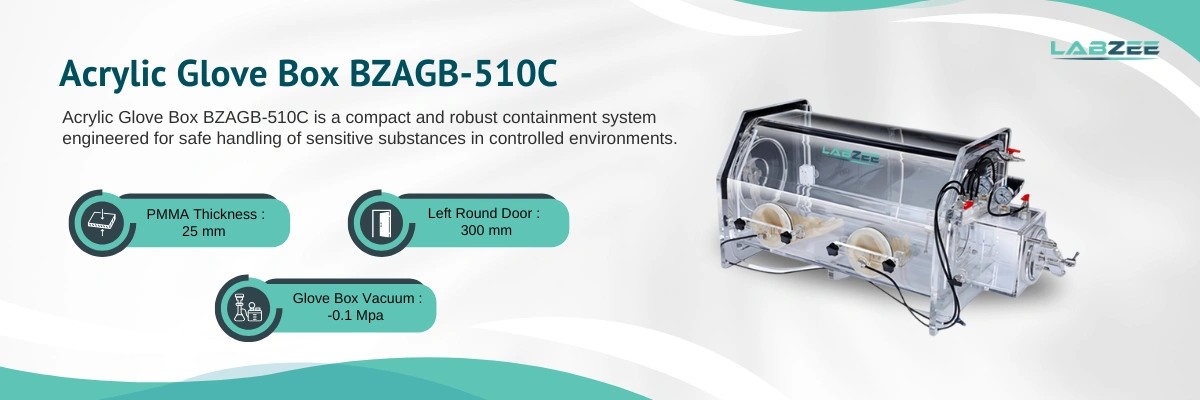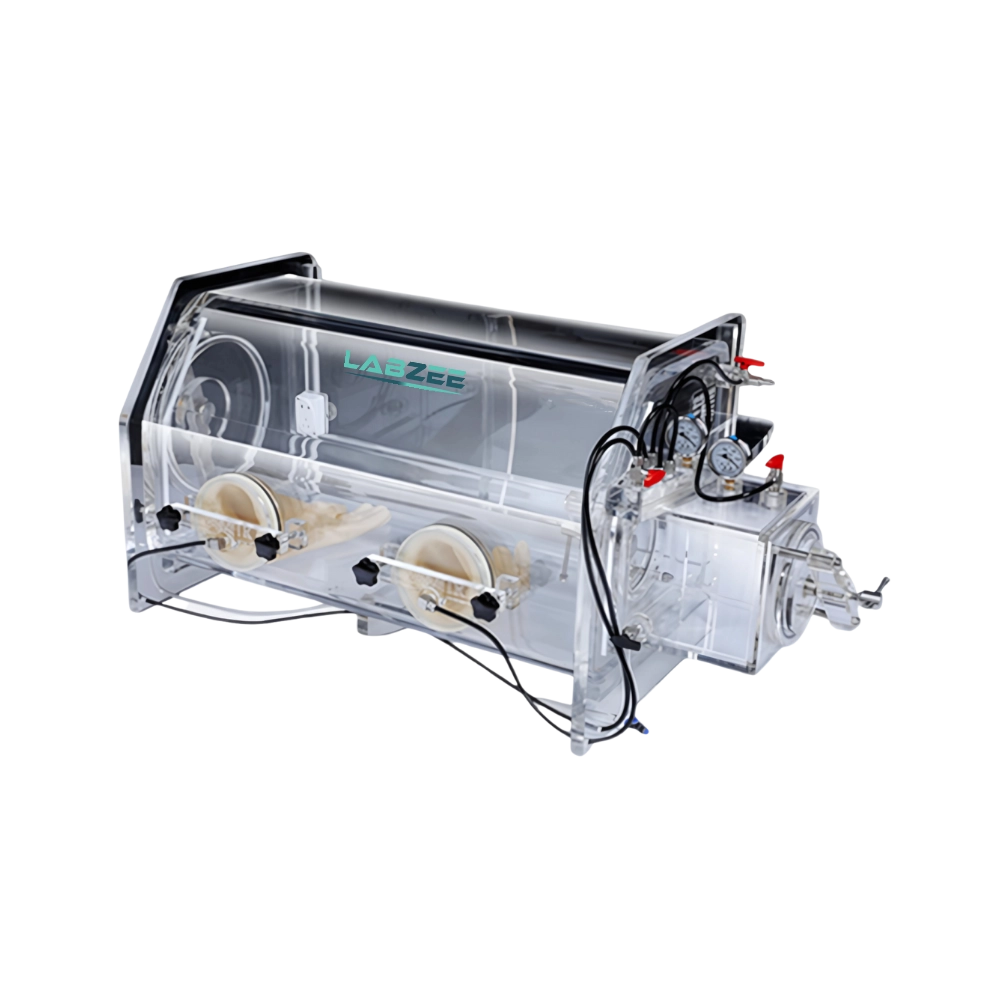
Acrylic Glove Box BZAGB-510C is a compact and robust containment system engineered for safe handling of sensitive substances in controlled environments. This glove box is constructed with the main box dimension 1000 × 500 × 500 mm & supports vacuum pressure up to -0.1 Mpa from durable 25 mm thick PMMA and includes a transition box to facilitate material transfer without compromising the internal atmosphere. It features dual glove access, ensuring easy and efficient operations inside the chamber. Its transparent structure allows for clear visibility, enhancing precision during procedures. Our Acrylic Glove Box BZAGB-510C is ideal for use in pharmaceutical research, electronics manufacturing, and chemical handling applications.
| Main Box Dimension | 1000 × 500 × 500 mm |
| Material | PMMA |
| PMMA Thickness | 25 mm |
| Left Round Door | 300 mm |
| Gloves | 2 |
| Glove Box Vacuum | -0.1 Mpa |
| Transition Box | Yes |
| Transition Box Dimension | 240 × 240 × 240 mm |
| Product Dimension | 100 × 50 × 50 cm |
| Package Dimension | 156 × 68 × 66 cm |
| Net Weight | 129 Kg |
| Gross Weight | 138 Kg |
Our Acrylic Glove Box BZAGB-510C is designed for precise laboratory work, offering a reliable environment for chemical handling, microelectronics assembly, and contamination-sensitive tasks in research labs and industrial settings.
Frequently Asked Questions
1: What Is the Role of the Transition Chamber in This Setup?
The transition chamber acts as an airlock that allows you to introduce or remove materials without disturbing the atmosphere of the main glove box. It can also be vacuumed and flushed with inert gas to ensure a clean transfer process.
2: Can You Operate the Glove Ports Comfortably for Long Tasks?
The glove ports are ergonomically positioned and fitted with flexible latex gloves that allow for extended use. Users can perform detailed tasks with precision and comfort, although breaks are recommended during prolonged operations.
3: Is There Any Risk of Acrylic Cracking Under Vacuum Pressure?
No, the acrylic panels used are 20–30 mm thick and engineered to withstand vacuum conditions up to -0.1 MPa. When used properly and within its pressure limits, the structure remains stable and free of stress-related damage.
4: How Long Does It Take to Achieve a Full Vacuum in the Box?
The time to achieve full vacuum depends on the capacity of your vacuum pump and the size of the glove box. Typically, a few minutes are sufficient to evacuate the air completely, after which inert gas can be introduced as needed.
5: Can You Request Larger or Custom-Sized Glove Boxes?
Yes, customization is accepted. If your experiments require a larger workspace or additional ports and access points, the manufacturer can modify the design to meet your specific laboratory needs.
6: What Is an Acrylic Glove Box Used For?
An Acrylic Glove Box is used to create a sealed and controlled environment for conducting experiments. It helps isolate materials from air, moisture, dust, and contaminants. This makes it suitable for chemical, biological, or electronic research. Users can manipulate objects inside safely through attached gloves. It’s essential for clean and precise lab work.
7: What Materials Are Used in This Acrylic Glove Box?
The Acrylic Glove Box is made of clear, durable acrylic panels, providing high visibility and structural strength. It features latex gloves for hand access, which are soft and flexible. Gas inlet and outlet valves are made of stainless steel, offering durability and corrosion resistance. All materials are chosen for lab safety and reliability.
8: Is the Acrylic Glove Box Airtight?
Yes, the Acrylic Glove Box is designed to be airtight. The front door uses a sealing gasket and latches to prevent any air exchange with the outside. This ensures a stable atmosphere inside, which is crucial for sensitive tasks. Airtightness also protects both users and contents from contamination. It maintains the integrity of experiments.
9: How Do You Introduce Gas Into the Acrylic Glove Box?
Gas is introduced through the stainless steel inlet and outlet valves built into the Acrylic Glove Box. These valves allow you to purge the interior with inert gases like nitrogen or argon. This helps in creating a dry and oxygen-free environment. The process is straightforward and supports many types of scientific experiments. Pressure can be controlled safely.
10: Can the Acrylic Glove Box Be Used for UV Experiments?
Yes, the Acrylic Glove Box can support UV-based experiments. Its clear acrylic body allows limited UV transmission, which is useful for sterilization or polymer curing. However, compatibility depends on the wavelength of UV light used. It’s ideal for microbiology work or UV testing when used properly. Always follow safety guidelines when using UV light.