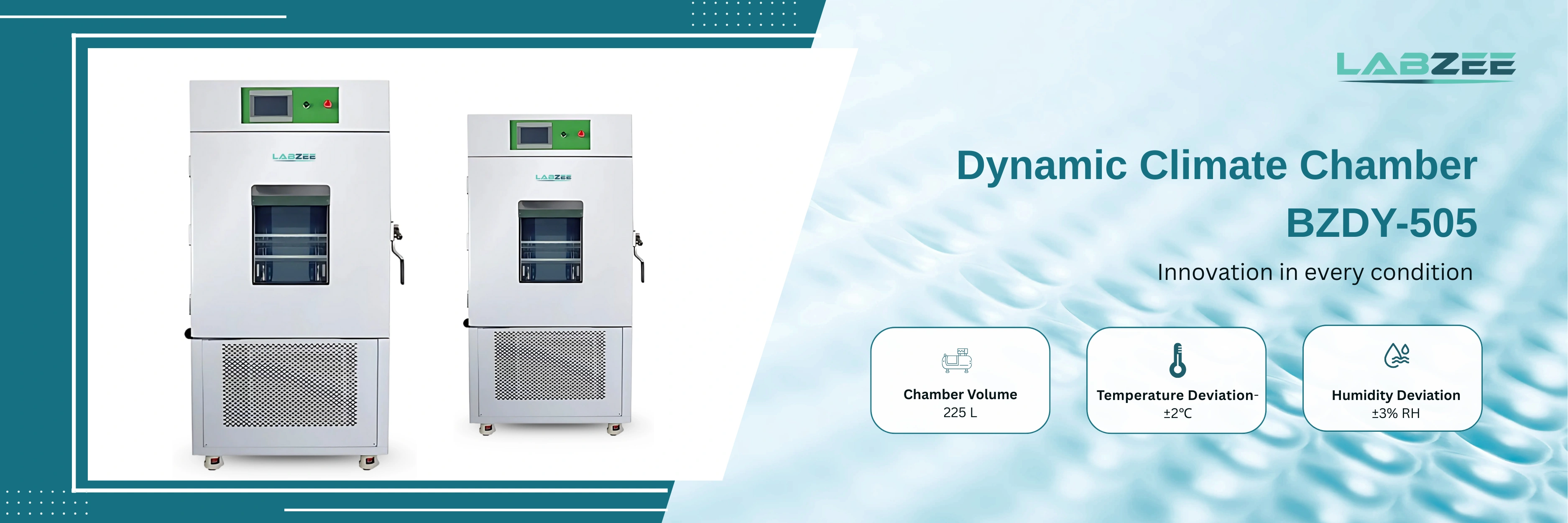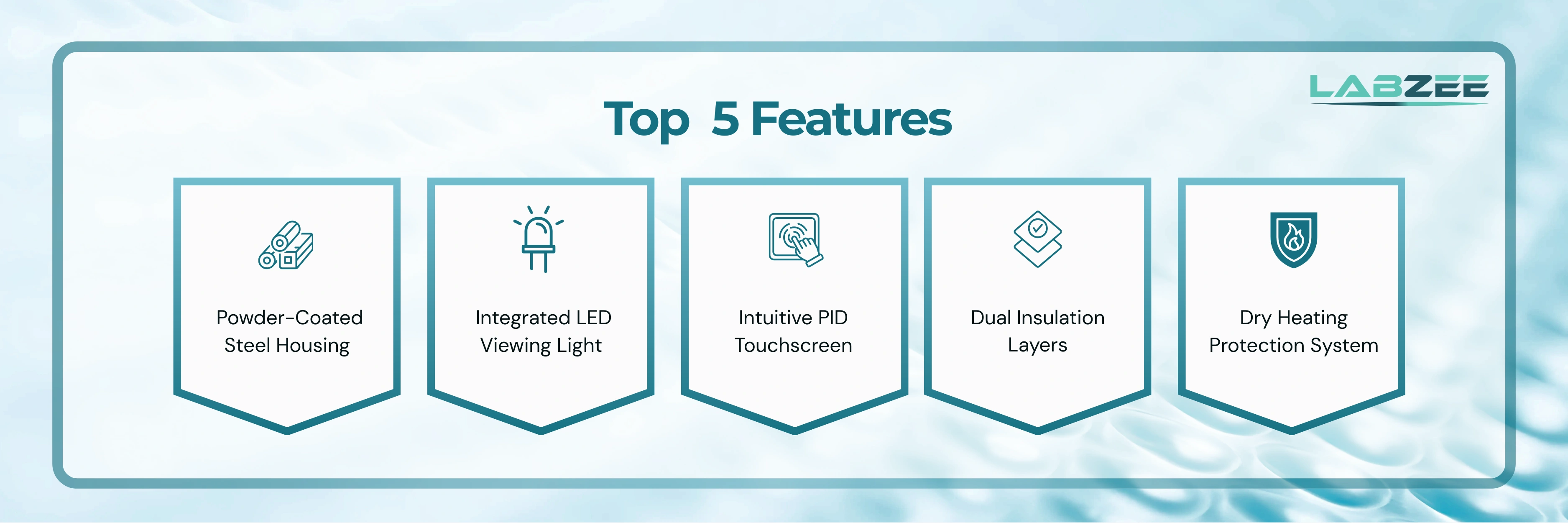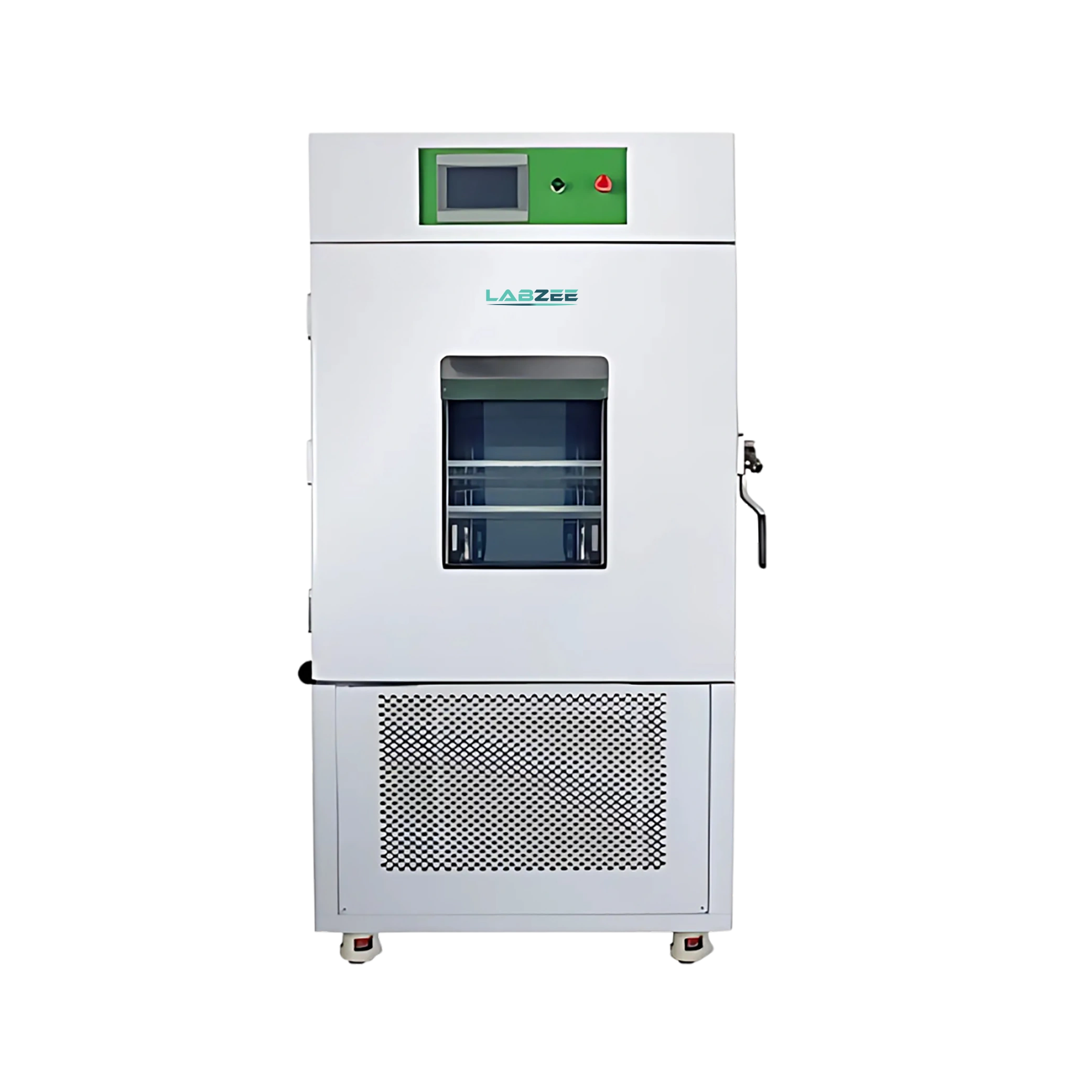
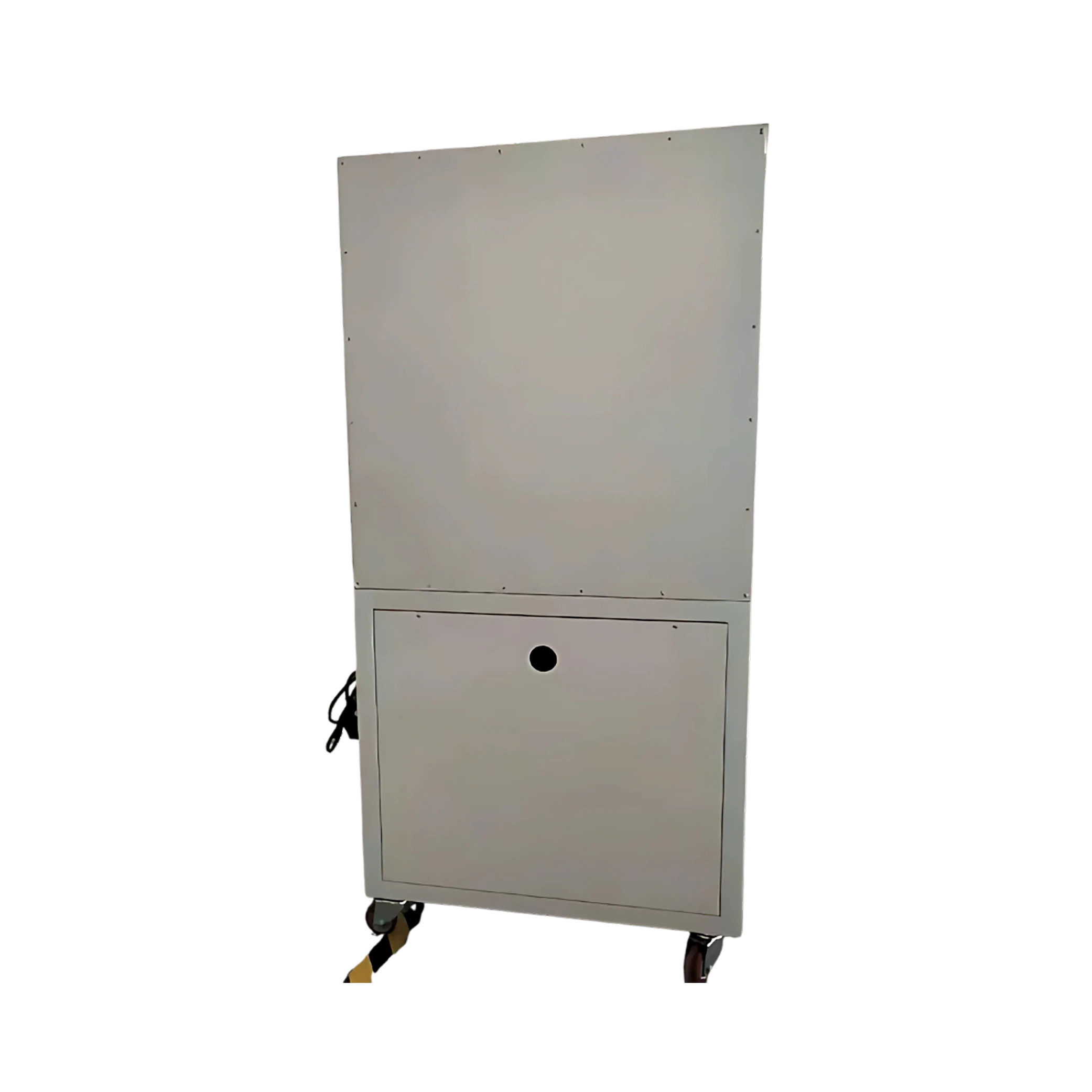
Labzee Dynamic Climate Chamber BZDY-505 is engineered for high-precision thermal and humidity testing inside a 225-liter corrosion-resistant stainless-steel chamber. It operates over a broad temperature range from -20°C to +150°C and 20–98% RH humidity. The dual-level water monitoring system protects against dry heating while ensuring consistent humidification. Its touchscreen interface enables intuitive control and real-time monitoring of environmental conditions. Our Dynamic Climate Chamber BZDY-505 is ideal for stability, thermal stress, and aging tests in pharma, electronics, and R&D.
| Chamber Volume | 225 L |
| Temperature Range | -20 to +150℃ |
| Temperature Range Without Light | 0 to 55℃ |
| Temperature Stability | ±0.5℃ |
| Temperature Deviation | ±2℃ |
| Temperature Uniformity | Less than 2℃ |
| Operating Temperature | -5 to +25℃ |
| Insulation Layer | Polyurethane Foam Insulation / Fiberglass |
| Humidity Range | 20 to 98% RH |
| Humidity Deviation | ±3% RH |
| Temp. Sensor | PT100 |
| Cooling Method | Compressor, Air Cooling |
| Power Supply | AC380V/220V ±10%, 50Hz ±0.5 |
| Power Consumption | 3000W |
| Chamber Size (W×D×H) | 50×60×75 cm |
| Exterior Size (W×D×H) | 90×126×190 cm |
| Gross weight | 370Kg |
Labzee Dynamic Climate Chamber BZDY-505 is suitable for industrial and mining enterprises, laboratories, and scientific research institutions requiring controlled temperature and humidity environments.
Frequently Asked Questions
1: What is the temperature and humidity range of the BZDY-505 chamber?
Dynamic Climate Chamber BZDY-505 operates from -20°C to +150°C and supports humidity levels between 20% and 98% RH, providing flexible testing conditions for various applications.
2: What type of control system does the chamber use?
Dynamic Climate Chamber BZDY-505 uses a PID-controlled touchscreen interface, enabling precise environmental control and real-time monitoring of temperature and humidity.
3: How does the chamber prevent dry heating?
Dynamic Climate Chamber BZDY-505 features a dual-level water monitoring system that detects water levels in the integrated tank and helps prevent dry heating by triggering alerts and shutdown if necessary.
4: What materials are used in the chamber construction?
Dynamic Climate Chamber BZDY-505 includes a corrosion-resistant stainless-steel interior and a durable powder-coated steel exterior, offering both cleanliness and structural integrity.
5: Is there any data recording functionality?
Yes, Dynamic Climate Chamber BZDY-505 is equipped with a USB data port for convenient environmental data export and logging.
6: Does it support cable access for test equipment inside the chamber?
Yes, Dynamic Climate Chamber BZDY-505 features two standard 10 cm cable ports (left and right) for safe and easy access to test equipment during experiments.
7: Is there an option for network connectivity or remote access?
Yes, LAN communication interface is available as an optional upgrade for remote control and data acquisition.
8: What is a Dynamic Climate Chamber used for?
Dynamic Climate Chambers are used to simulate controlled temperature and humidity conditions for testing product stability, reliability, and performance under varying environmental cycles.
9: What industries commonly use Dynamic Climate Chambers?
These chambers are widely used in pharmaceuticals, electronics, automotive, materials research, and industrial testing laboratories for quality control and product validation.
10: What chamber capacities are available?
Labzee Dynamic Climate Chambers are offered in multiple models with capacities ranging from 120L to 504L, allowing flexibility for both small-scale laboratory use and larger industrial testing.
11: What is the temperature and humidity range of Labzee Dynamic Climate Chambers?
They offer a wide operational temperature range from extremely low to high levels and provide stable humidity control to support diverse testing applications.
12: How is humidity controlled within the chamber?
Humidity is regulated through a PID-controlled system with steam generation and a dual-level water monitoring mechanism, ensuring stable humidity without risk of dry heating or system failure during long test cycles.
13: What ensures temperature uniformity in the chamber?
The chambers use uniform airflow circulation and high-performance insulation to maintain consistent temperature gradients, ensuring reliable and repeatable test results across all chamber zones.