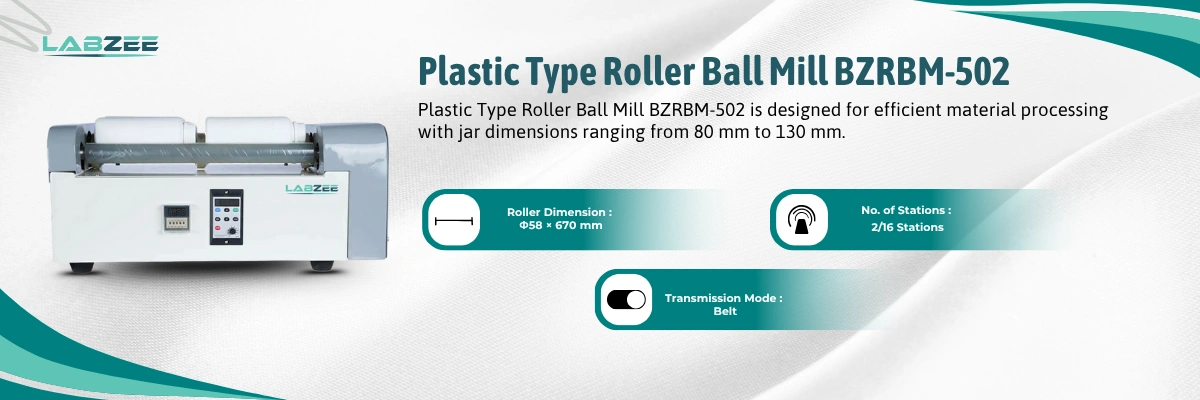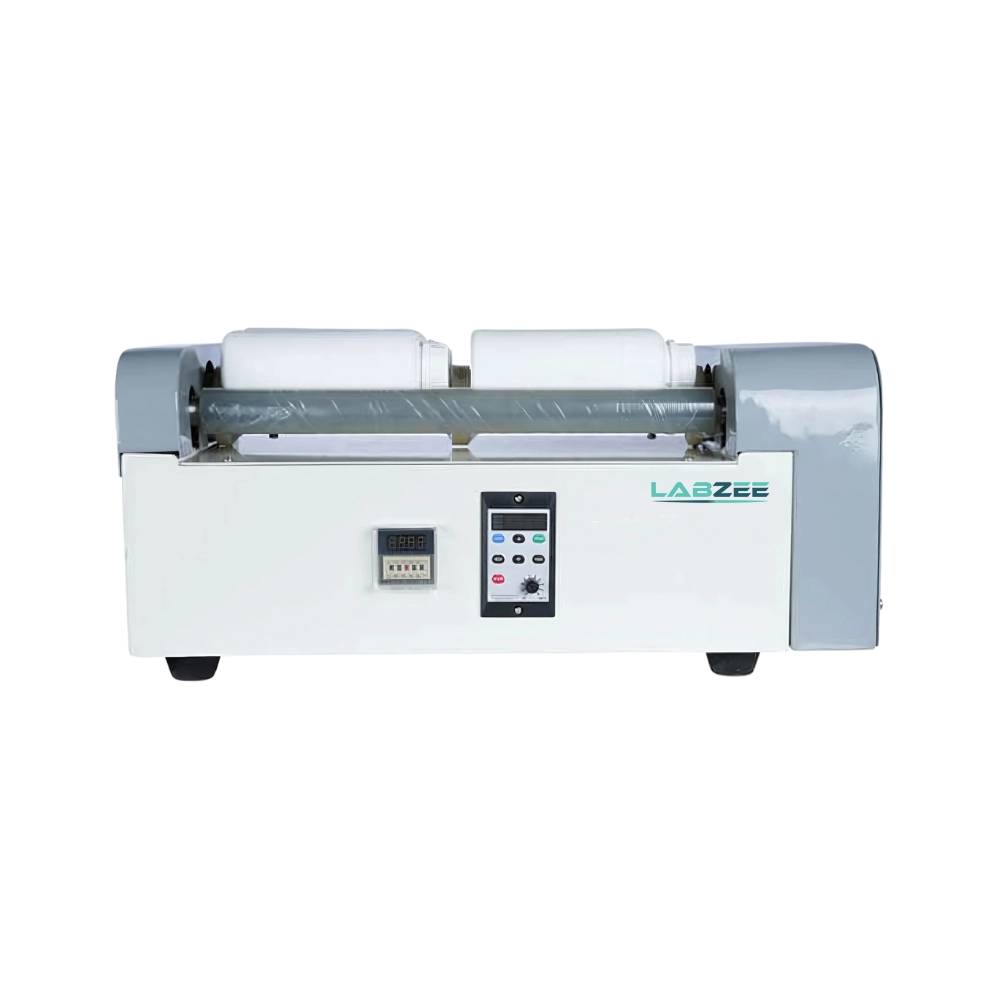
Plastic Type Roller Ball Mill BZRBM-502 is designed for efficient material processing with jar dimensions ranging from 80 mm to 130 mm. The Ball Mill is equipped with 2 to 16 stations and a robust belt-driven transmission system, offers versatility and high efficiency in grinding. Its roller dimension of φ58 × 670 mm ensures smooth operation while its power consumption of 1100 W makes it energy efficient. Its compact yet durable design makes it suitable for both small and large-scale applications. Our Plastic Type Roller Ball Mill BZRBM-502 is ideal for laboratories requiring high-throughput material processing.
| Jar Dimension | 80 mm-130 mm |
| Roller Dimension | Φ58 × 670 mm |
| No. of Stations | 2/16 Stations |
| Transmission Mode | Belt |
| Power Consumption | 1100 W |
| Power Supply | 220 V / 50 Hz |
Our Plastic Type Roller Ball Mill BZRBM-502 is frequently used in laboratory settings for high-throughput grinding and mixing of materials, including in the pharmaceutical, chemical, and materials science industries.
Frequently Asked Questions
1: Can it handle high temperatures during grinding?
No, it’s best to avoid overheating, as plastic components may deform at high temperatures.
2: How do you control grinding intensity?
You can adjust speed settings or grinding time to control how fine the end material becomes.
3: Is this model noisy?
No, it operates quietly compared to metal-based mills, which makes it ideal for office or lab spaces.
4: Can it handle sticky samples?
Sticky materials may build up, so you’ll need to pause periodically for cleaning to keep the process smooth.
5: Is regular maintenance required?
You should clean jars and check moving parts regularly, but overall, it requires low maintenance.
6: What is a Plastic Type Roller Ball Mill used for?
You can use it for grinding soft to medium-hard materials, especially non-metallic powders and organic compounds.
7: Why does it use plastic instead of metal?
Plastic construction helps reduce contamination, especially when working with sensitive or reactive materials.
8: Is it suitable for corrosive samples?
Yes, plastic components resist corrosion, making it safer for acid- or base-sensitive samples.
9: Can you use metal jars with this mill?
Yes, you can use compatible metal jars, but plastic jars are preferred to match the mill’s build and reduce wear.
10: Is it safe for pharmaceutical use?
Yes, if used with food-grade plastic jars, it’s safe for pharmaceutical research and sample preparation.