
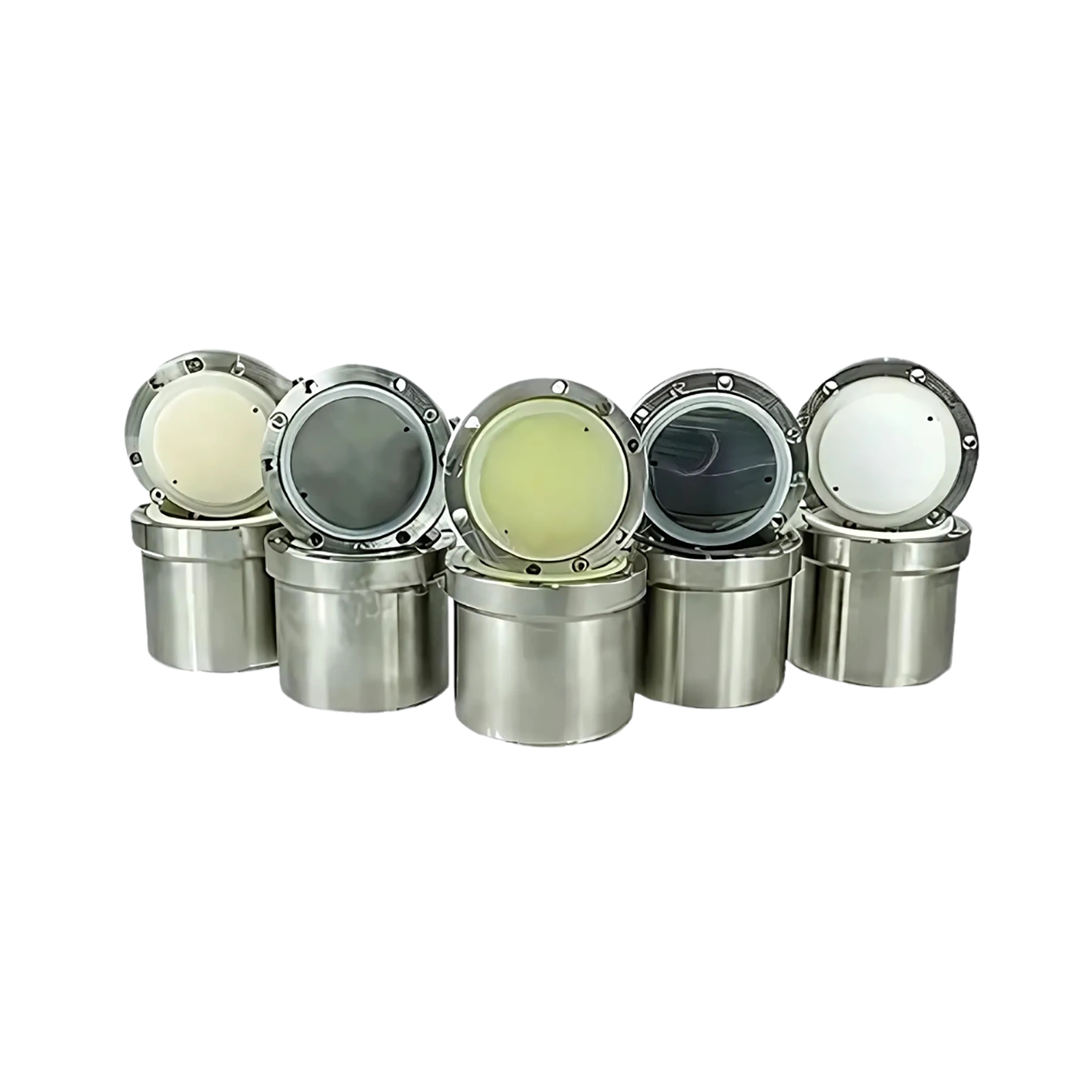
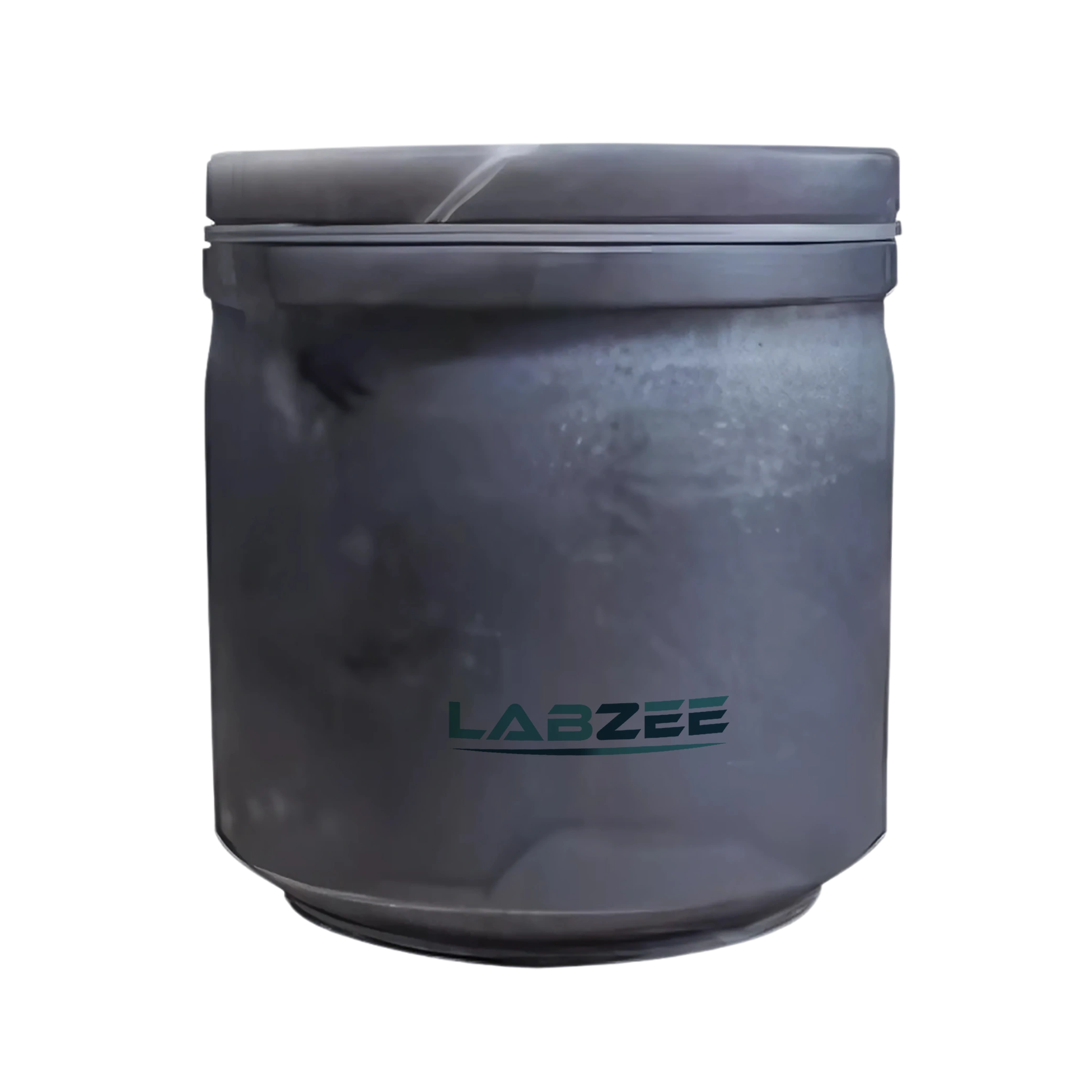
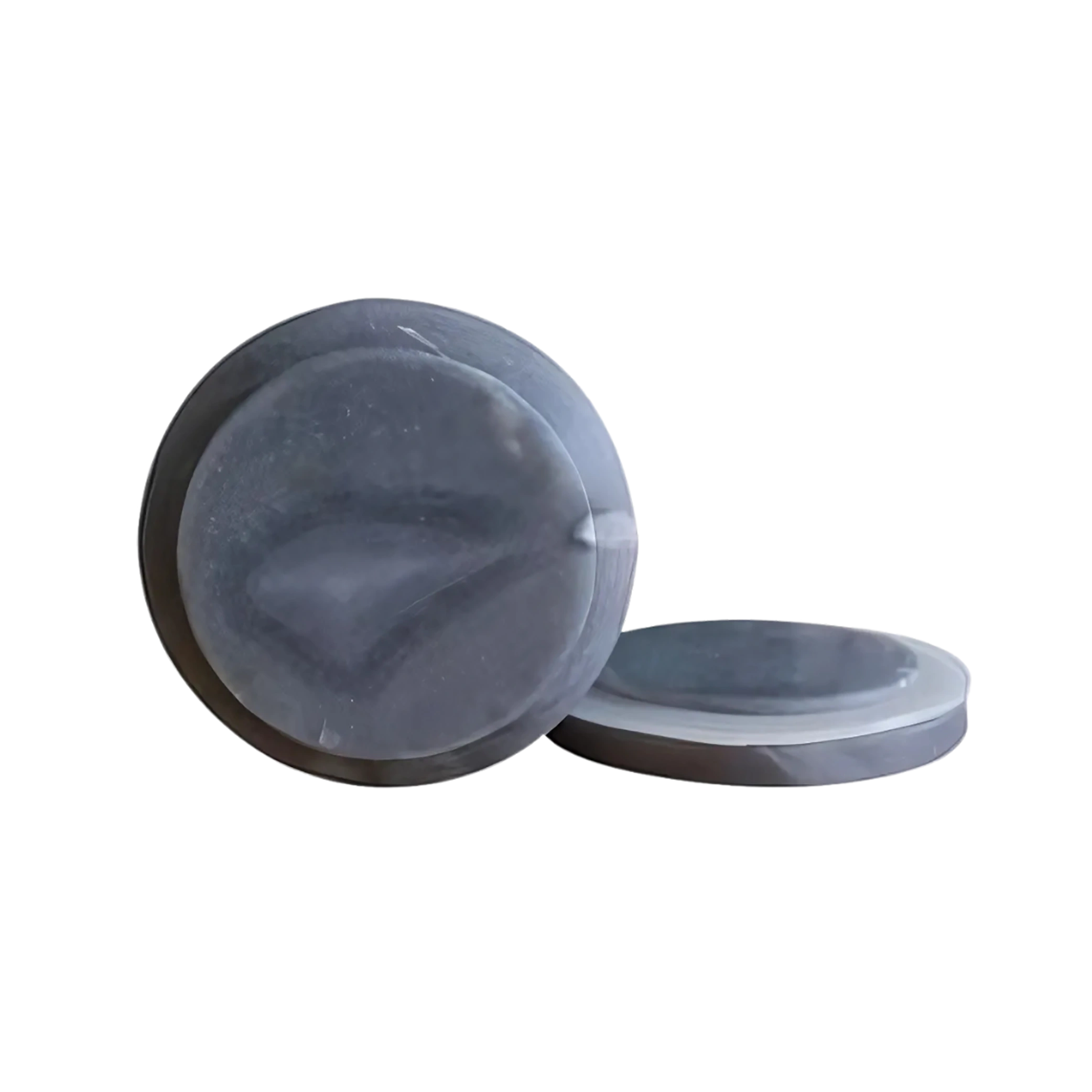
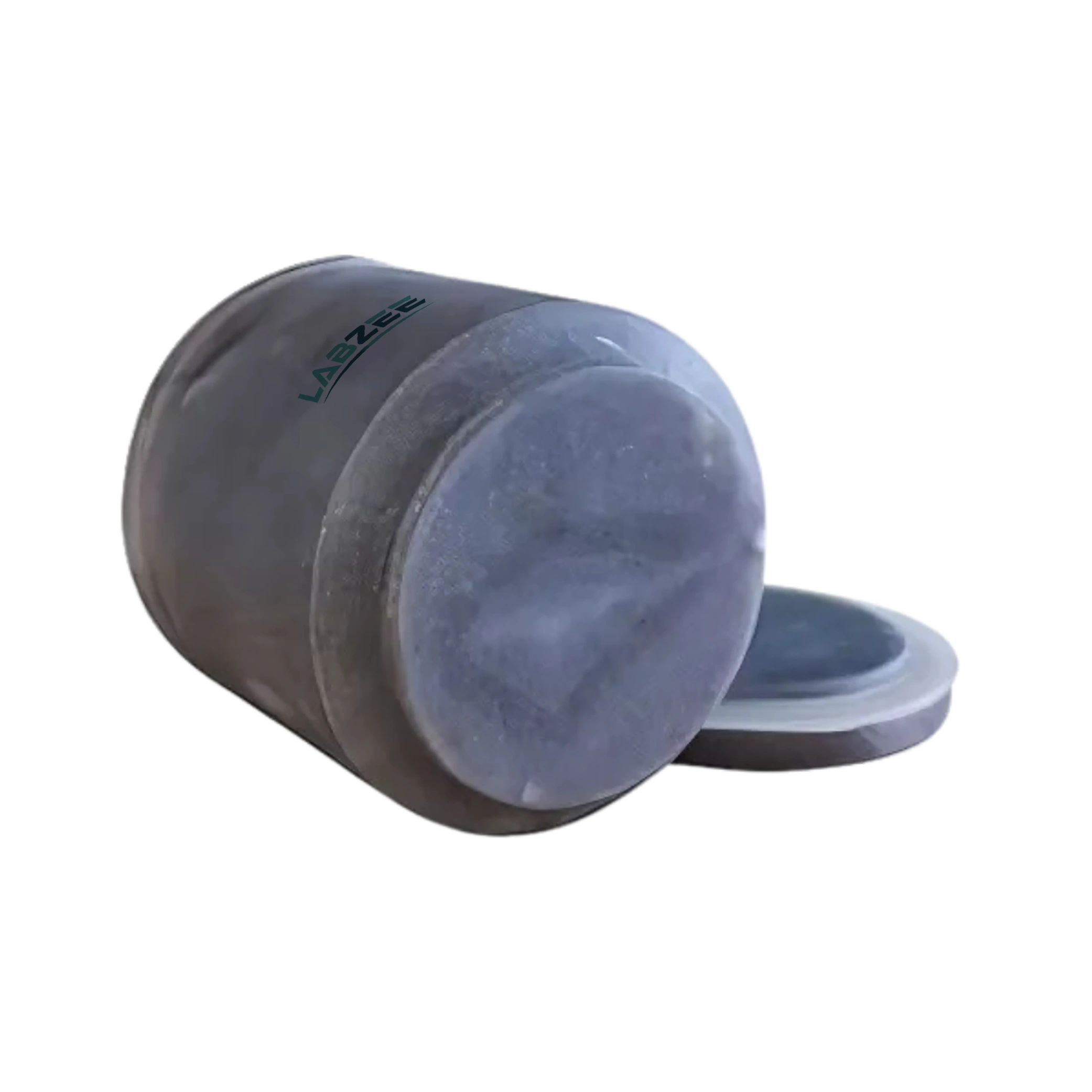
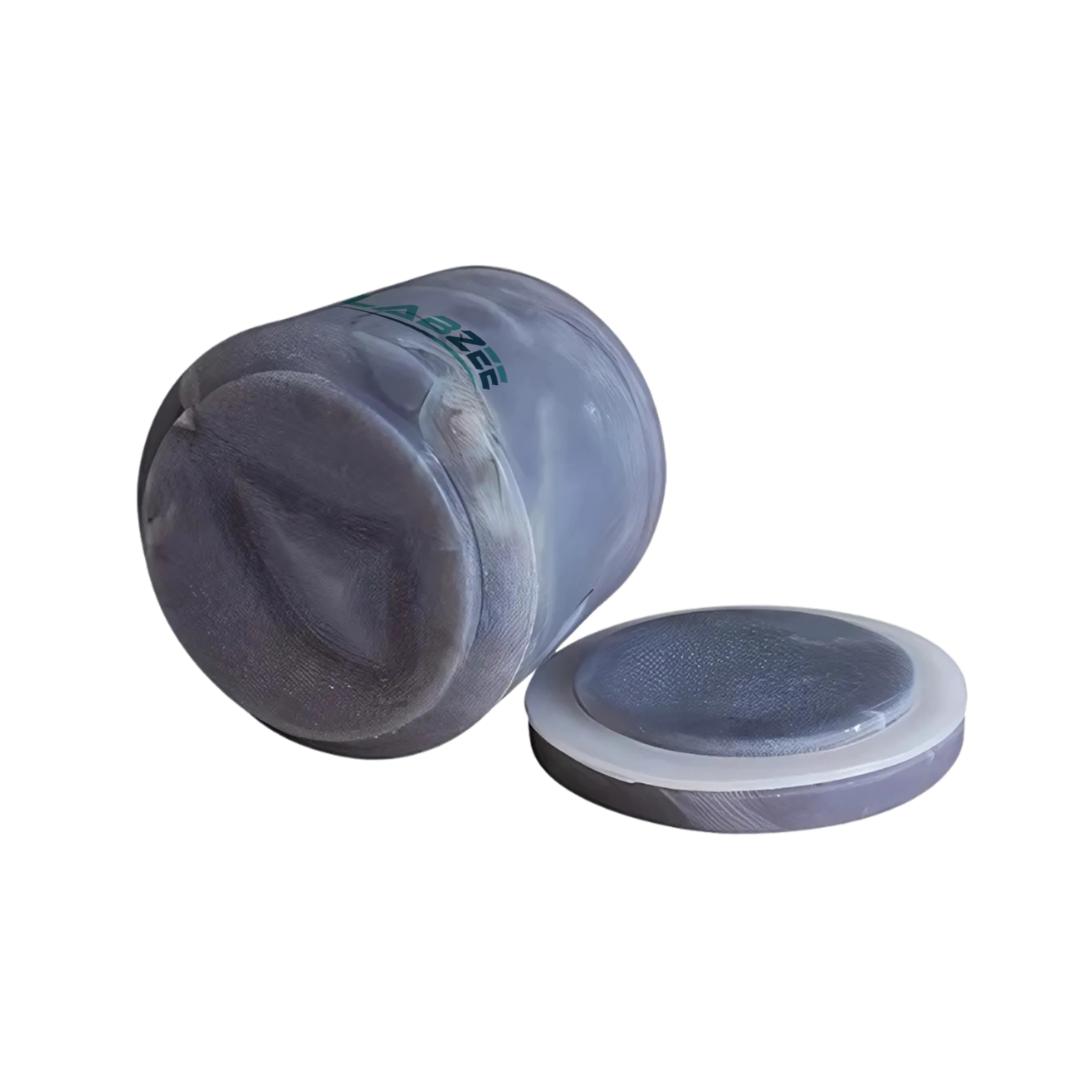
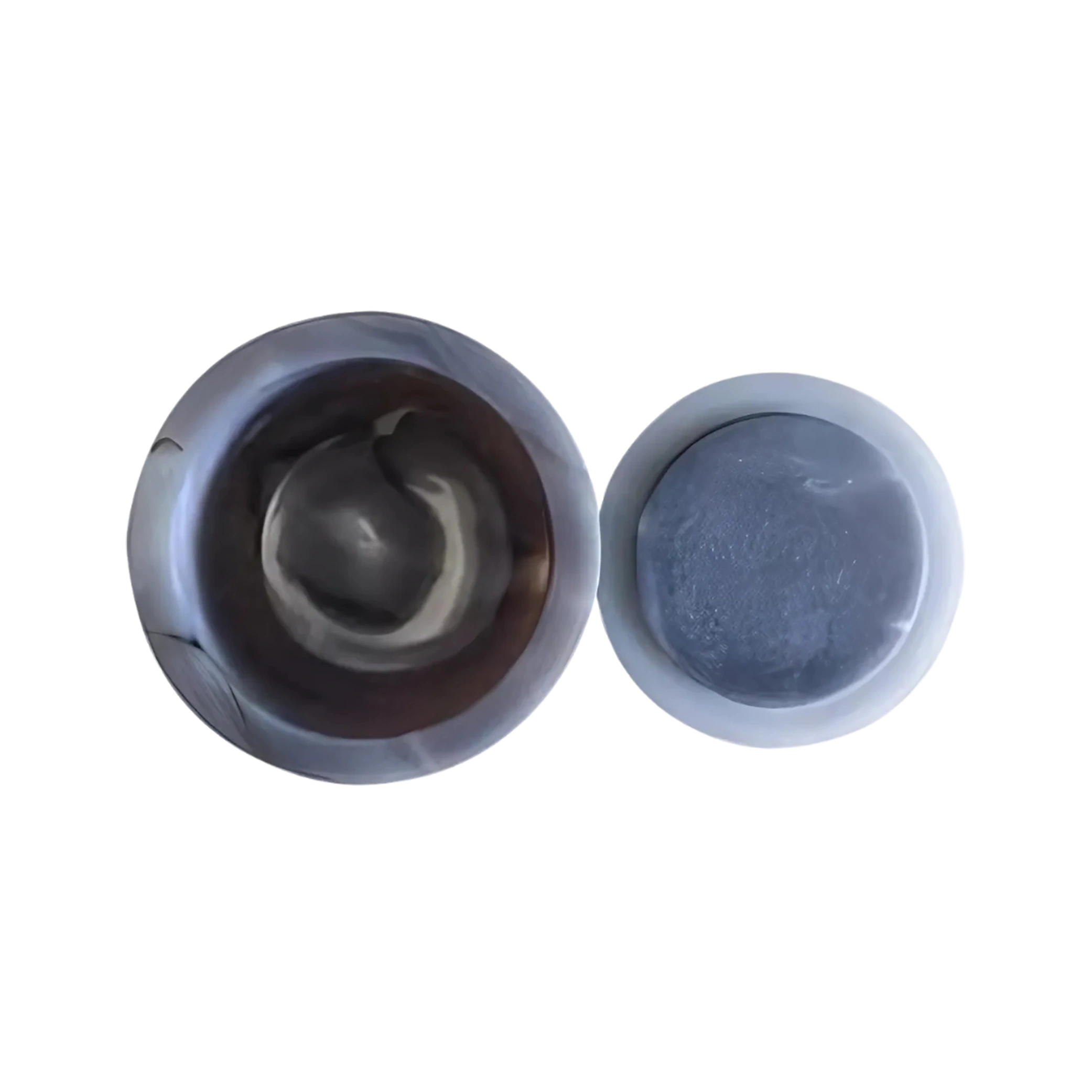
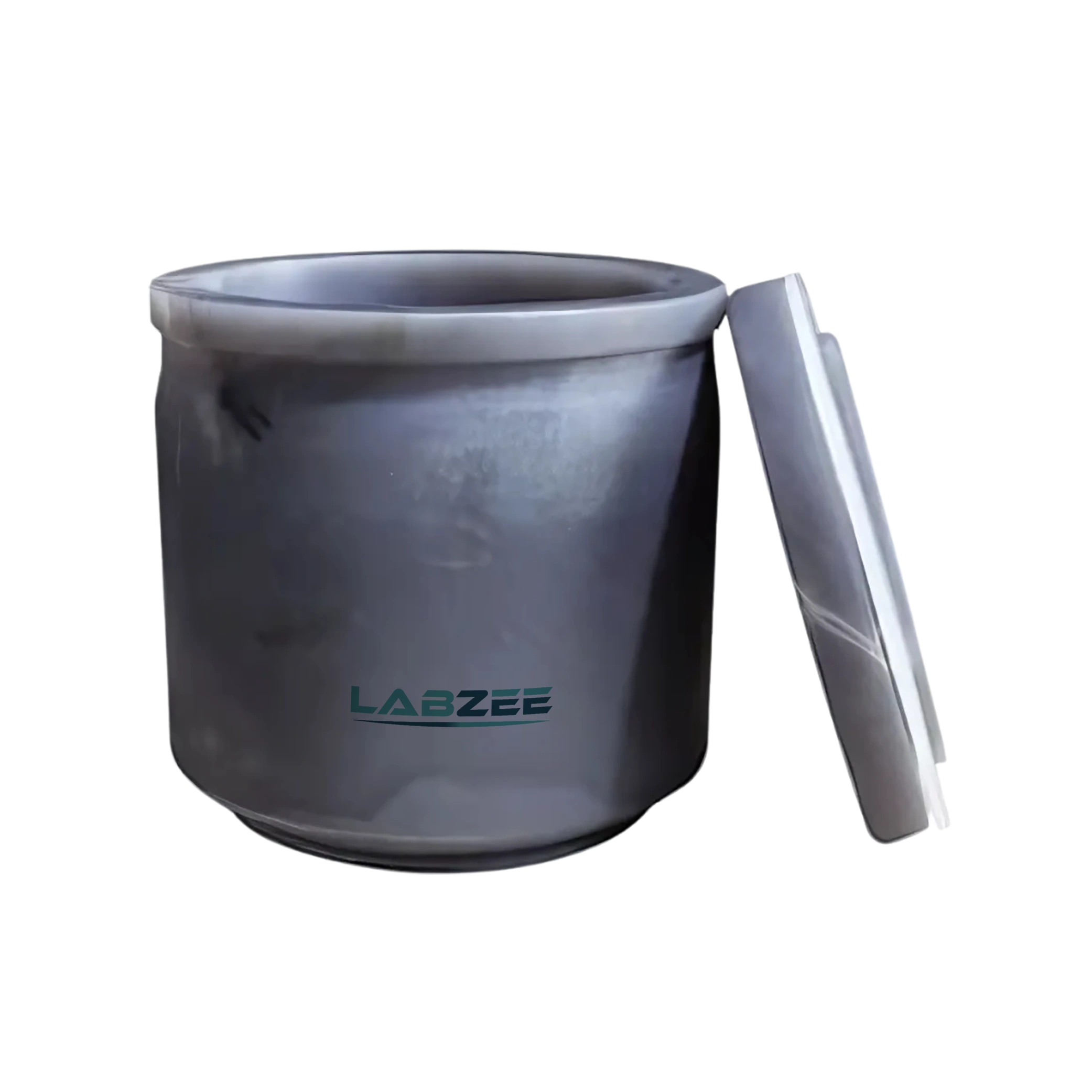
Lined Agate Vacuum Ball Mill Jar BZVAJ-502 is a precision-engineered jar designed for ultra-clean milling of sensitive and high-purity samples. This Ball Mill Jar includes a 6 mm thick wall and a 12 mm cover, offering strength and containment for vacuum grinding. It resists contamination, making it suitable for trace-level elemental work. Its non-reactive agate lining maintains material integrity even under aggressive milling conditions. Our Lined Agate Vacuum Ball Mill Jar BZVAJ-502 is best suited for spectroscopy, mineral analysis, and nuclear material sample preparation.
| Volume | 100 ml |
| Height | 61 mm |
| Valves | No valves |
| Wall Thickness | 6 mm |
| Cover Thickness | 12 mm |
| Bottom Diameter | 74.5 mm |
| Internal Diameter | 49 mm |
| External Diameter | 61 mm |
| Cover Weight | 0.552 Kg |
| Grinding Jar Weight | 2.034 Kg |
Our Lined Agate Vacuum Ball Mill Jar BZVAJ-502 is used in mineral trace analysis, isotopic sample preparation, pigment particle size control, and high-purity chemical formulation.
Frequently Asked Questions
1: What makes Lined Agate Vacuum Ball Mill Jar BZVAJ-502 suitable for trace work?
Its agate lining prevents metal contamination, making it ideal for ultra-pure sample grinding in trace element analysis.
2: Can you use BZVAJ-502 with vacuum-sealed systems?
Yes, it is designed for vacuum compatibility and ensures sealed, contamination-free grinding conditions.
3: How durable is the agate lining in BZVAJ-502?
The agate lining offers excellent hardness and can withstand rigorous milling without degradation.
4: Is BZVAJ-502 safe for chemical synthesis grinding?
Yes, it is chemically inert and stable, making it ideal for sensitive and reactive material processing.
5: How is BZVAJ-502 maintained for repeated use?
Cleaning is simple with mild solvents or ultrasonic methods, preserving its inert and contamination-free surface.
6: Why use an agate-lined jar for vacuum grinding?
Agate is chemically inert, extremely hard, and non-metallic, making it ideal for high-purity milling without introducing trace contamination-even under vacuum conditions.
7: Can this jar be used for wet milling?
Yes, the agate lining is non-porous and resistant to most solvents. Combined with vacuum sealing, it supports both wet and dry grinding for sensitive samples.
8: What type of samples is this jar best suited for?
It is ideal for minerals, rare earths, catalysts, ceramics, and any application where trace metal contamination must be avoided during analysis or synthesis.
9: Is agate fragile compared to metal jars?
While highly wear-resistant, agate is brittle and should be handled carefully. Avoid heavy impacts or using metallic media, which could damage the lining.
10: How do I maintain the jar post-milling?
Clean the inner surface with a soft cloth and mild lab detergent. Avoid abrasive brushes or thermal shock, which could cause cracks in the agate lining.