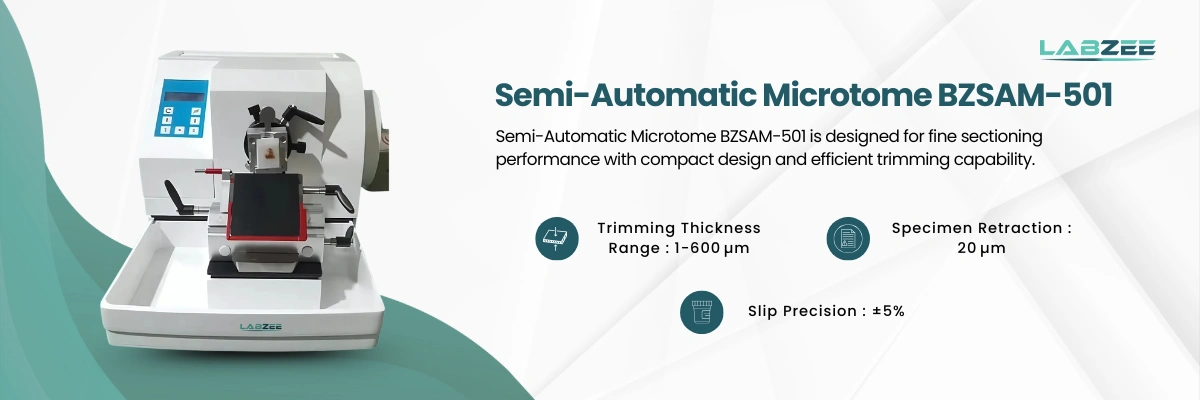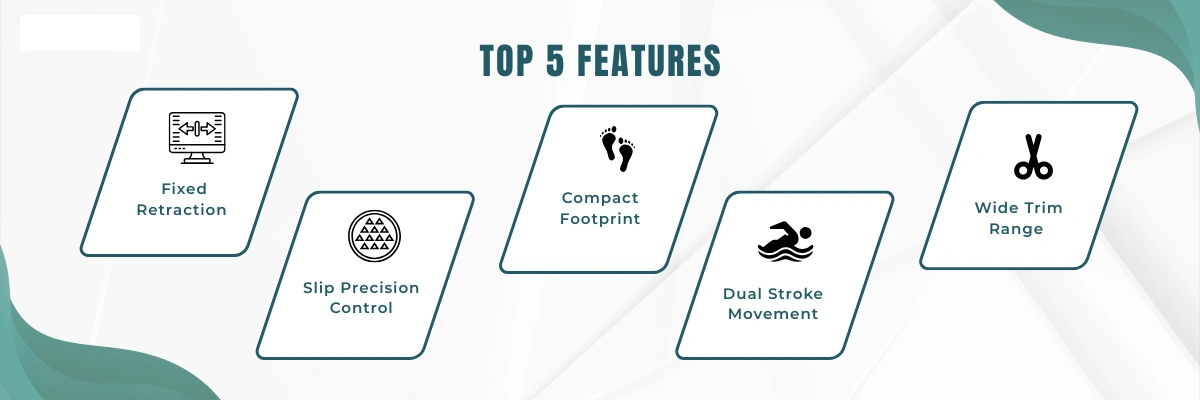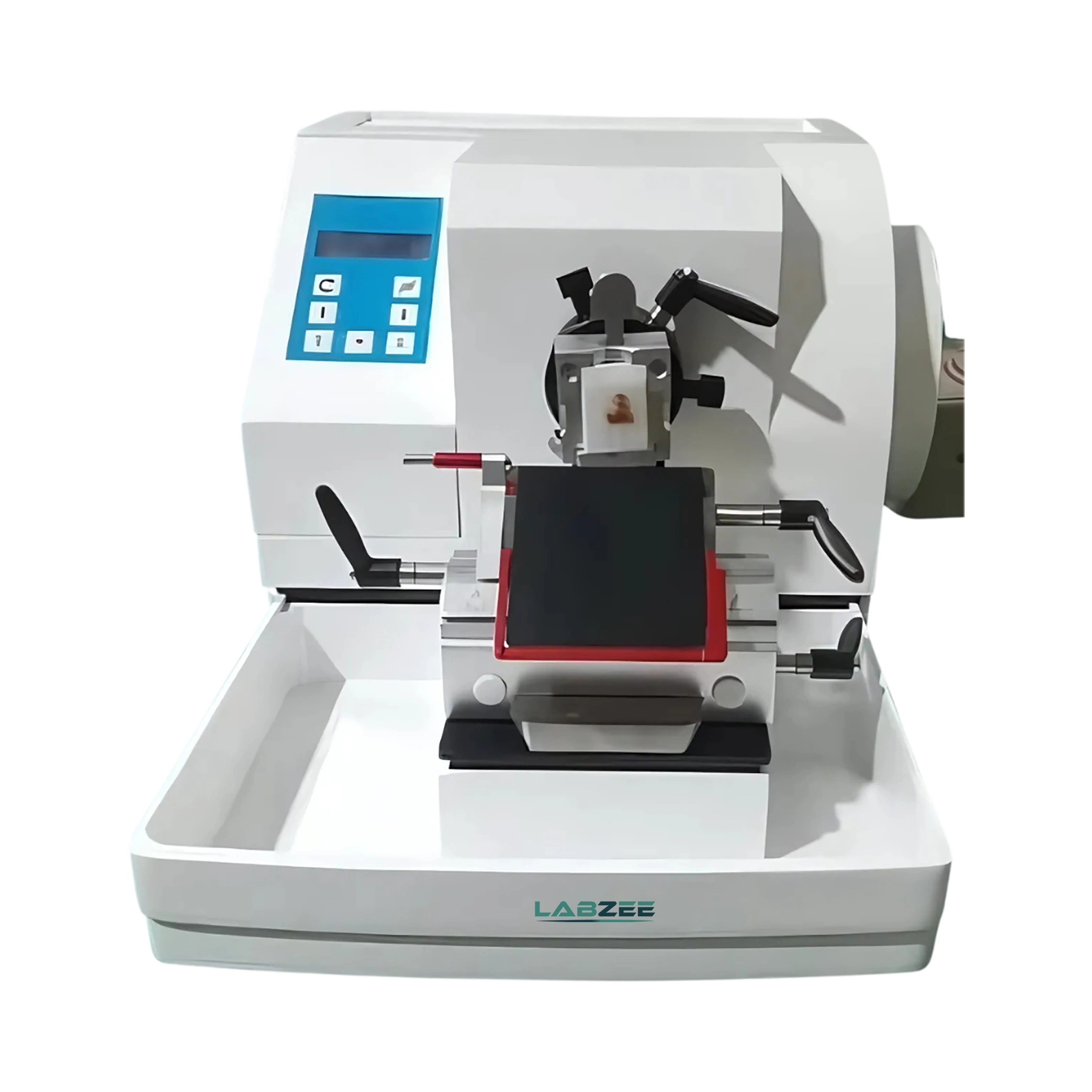
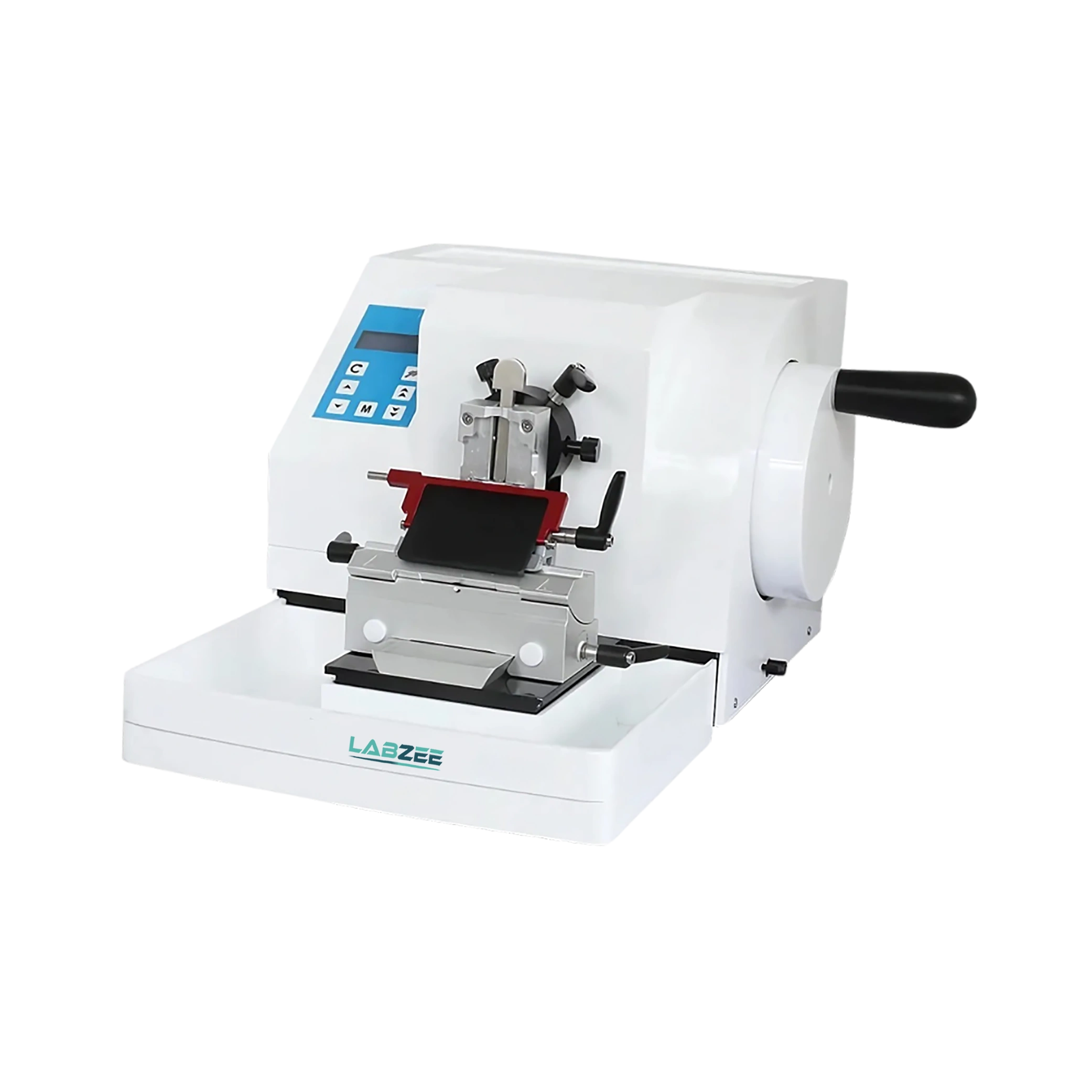
Semi-Automatic Microtome BZSAM-501 is designed for fine sectioning performance with compact design and efficient trimming capability. This microtome ensures precision with 0.5-100 µm section range and 1-600 µm trimming thickness for detailed sample slicing. It features smooth stroke movement and a fixed retraction setting to maintain specimen integrity. Its design ensures stable cutting action and reduces operator fatigue during repetitive use. Our Semi-Automatic Microtome BZSAM-501 is ideal for applications in histological diagnostics, cytopathology, and tissue-based biomedical research.
| Section Thickness Range | 0.5-100 µm (Optimal slicing at 3-5 µm) |
| Section Thickness Setting | 0.5-5 µm (0.5 µm steps); 5-20 µm (1 µm steps); 20-60 µm (5 µm steps); 60-100 µm (10 µm steps) |
| Trimming Thickness Range | 1-600 µm |
| Trimming Thickness Setting | 1-10 µm (1 µm steps); 10-20 µm (2 µm steps); 20-50 µm (5 µm steps); 50-100 µm (10 µm steps); 100-600 µm (50 µm steps) |
| Specimen Retraction | 20 µm |
| Slip Precision | ±5% |
| Specimen Horizontal Stroke | 20 mm |
| Specimen Vertical Stroke | 55 mm |
| Max Specimen Dimension | 50 × 45 mm |
| Product Dimension | 530 × 520 × 450 mm |
| Package Dimension | 520 × 520 × 450 mm |
| Net Weight | 32 Kg |
| Gross Weight | 43 Kg |
| Packaging Type | Wooden Case |
Disposable Blade Holder × 1 Piece
Specimen Cassette × 1 Piece
Fuse(2A) × 2 Pieces
Power line × 1 line
Hexagonal Wrench × 1 set
Brush × 1 Piece
Our Semi-Automatic Microtome BZSAM-501 provides efficient sectioning of tissue specimens in biomedical labs for histology, cytology, and pathological diagnostics, enabling reliable preparation of thin sections for microscopic examination and research.
Frequently Asked Questions
1: Can you describe the sectioning capability of this microtome?
The BZSAM-501 offers a section thickness range from 0.5 to 100?µm, providing optimal slicing performance especially between 3-5?µm, making it suitable for precise histological sample preparation.
2: How is trimming handled in this microtome?
It supports a trimming thickness range of 1-600?µm with multiple incremental settings, enabling efficient removal of excess material before sectioning begins.
3: What are the benefits of fixed specimen retraction?
A preset 20?µm retraction helps protect the specimen and blade, reducing the risk of damage and increasing consistency during repetitive slicing tasks.
4: Does the design support ergonomic use?
Yes, the compact footprint and optimized vertical and horizontal strokes are engineered for ease of operation and reduced user fatigue.
5: Can you explain the slip precision of this model?
The microtome offers ±5% slip precision, which helps maintain accuracy and ensures each section is consistently aligned with minimal deviation.
6: When is a Semi-Automatic Microtome preferred over other types?
It is preferred when labs need a balance between automation and manual precision. Motorized functions reduce fatigue, while manual control improves accuracy. It suits medium-throughput labs needing flexibility.
7: Can sectioning speed be adjusted?
Yes, motor speed and specimen feed can be adjusted for different sample types. This helps optimize cutting for delicate or dense tissues. User-defined settings can improve workflow consistency.
8: Can memory settings be saved for routine tasks?
Yes, most models include memory functions to store frequently used parameters. This reduces setup time and ensures consistent sectioning. It is especially helpful in labs with repetitive workflows.
9: When should both manual and motorized modes be used?
Use manual mode for delicate control on sensitive samples. Use motorized mode for bulk sectioning or when handling tougher blocks. Switching modes allows precision without compromising efficiency.
10: Can it be used for educational purposes in histology training?
Yes, the dual control makes it excellent for teaching both manual and automated techniques. It allows students to develop skills gradually. Clear controls and safety features enhance classroom use.