


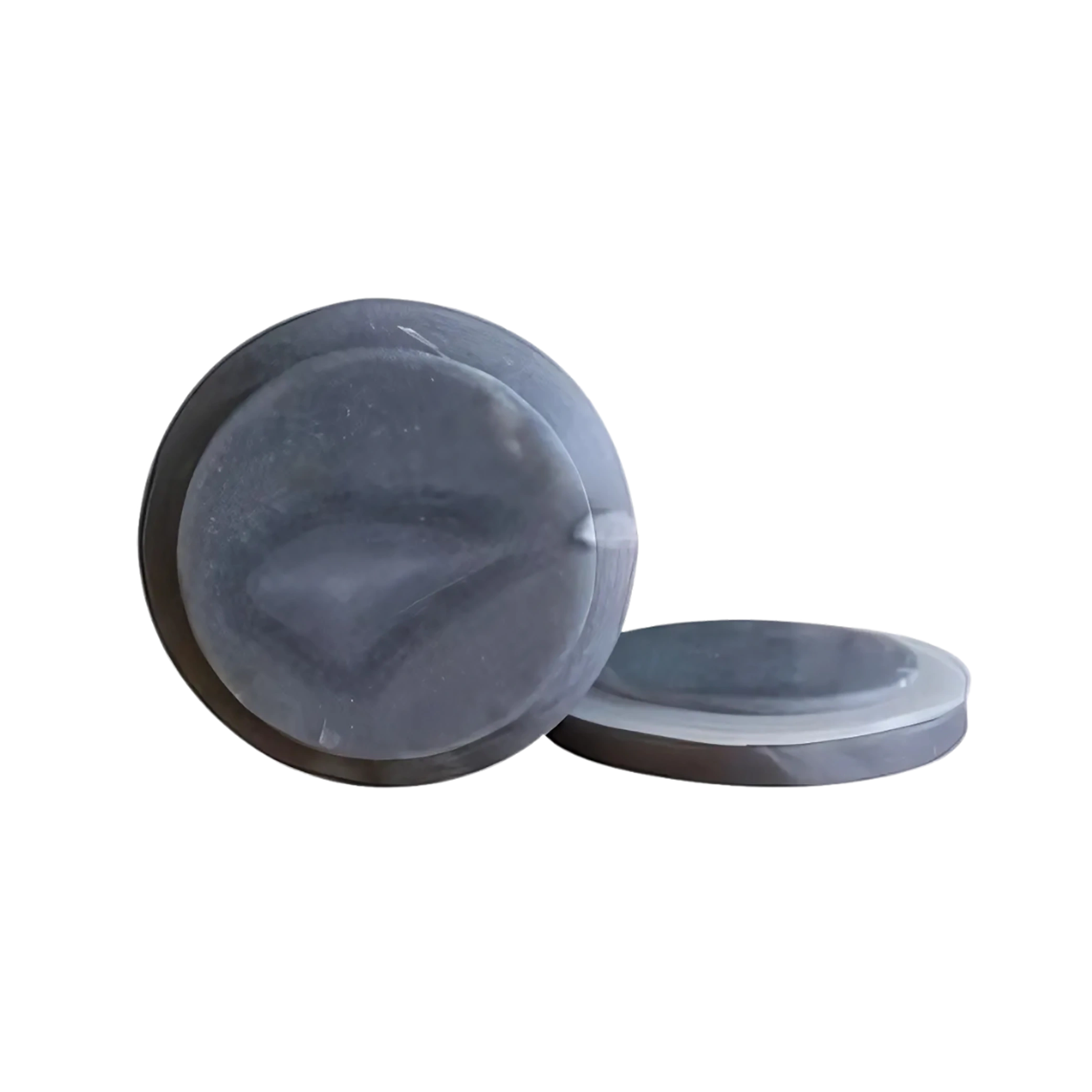

Agate Ball Mill Jar BZABJ-501 is ideal for ultra-fine grinding with high chemical purity. This ball mill jar has a 50 ml volume and is sealed using a flat gasket for reliable, low-contamination performance. It provides superior resistance to abrasion and does not react with acids or alkalis. Its compact and uniform structure supports consistent grinding across all sample types. Our Agate Ball Mill Jar BZABJ-501 is used in organic compound milling, pigment particle reduction, spectral sample preparation, and trace element testing applications only.
| Volume | 50 ml |
| Height | 64 mm |
| Seal Ring Type | Flat Gasket |
| Wall Thickness | 7 mm |
| Cover Thickness | 14 mm |
| Internal Diameter | 50 mm |
| External Diameter | 58 mm |
| Bottom Diameter | 64 mm |
| Grinding Jar Cover Weight | 0.100 Kg |
| Grinding Jar Wet Weight | 0.345 Kg |
Our Agate Ball Mill Jar BZABJ-501 is used for grinding delicate organic substances, reducing pigment particle sizes, preparing precision spectral analysis samples, and conducting trace-level contamination-sensitive elemental testing in research environments.
Frequently Asked Questions
1: How does the BZABJ-501 jar help in sample purity retention?
The BZABJ-501 uses agate material, which is chemically inert and prevents unwanted reactions with sample materials, making it ideal for purity-sensitive processes.
2: Can you use BZABJ-501 for acidic compounds?
Yes, the jar’s construction allows it to resist acids and alkalis effectively, making it suitable for processing chemically aggressive samples.
3: What are the size and handling benefits of the BZABJ-501 jar?
With a compact 50 ml volume and lightweight body, BZABJ-501 is easy to mount on smaller ball mill systems and enables precise, controlled grinding.
4: Is the BZABJ-501 suitable for spectroscopy sample prep?
Yes, it ensures homogeneous grinding without contamination, which is essential for accurate spectral or elemental analysis results.
5: Why choose agate for the BZABJ-501 jar material?
Agate offers a hard, dense, and inert grinding surface that minimizes sample loss, mechanical wear, and chemical alteration during milling.
6: When is an Agate Ball Mill Jar most suitable?
An Agate Ball Mill Jar is ideal when ultra-purity is required and contamination must be strictly avoided. It’s widely used in trace element analysis, geology, and nanotechnology. Its inert nature prevents sample alteration during grinding.
7: Can the Agate Ball Mill Jar be used for both dry and wet grinding?
Yes, the Agate Ball Mill Jar supports dry and wet grinding of small volumes. For wet grinding, ensure proper sealing to avoid spills. It’s recommended for fine grinding, not heavy mechanical impact.
8: Can it be used with hard or metallic samples?
No, the Agate Ball Mill Jar is best suited for soft to medium-hard materials. Avoid using it with metallic or very hard samples to prevent cracking. Always match the jar’s hardness to the sample type.
9: When should the Agate Ball Mill Jar be replaced?
Replace the Agate Ball Mill Jar if cracks, surface wear, or visible chips are found. Even small fractures can compromise sample safety. Inspect regularly to maintain purity and prevent breakage.
10: Can the Agate Ball Mill Jar be cleaned easily between batches?
Yes, the Agate Ball Mill Jar has a smooth, non-stick surface that makes cleaning simple. Use distilled water, alcohol, or mild solvents depending on the material milled. Avoid extreme temperature changes that may cause stress fractures.

