

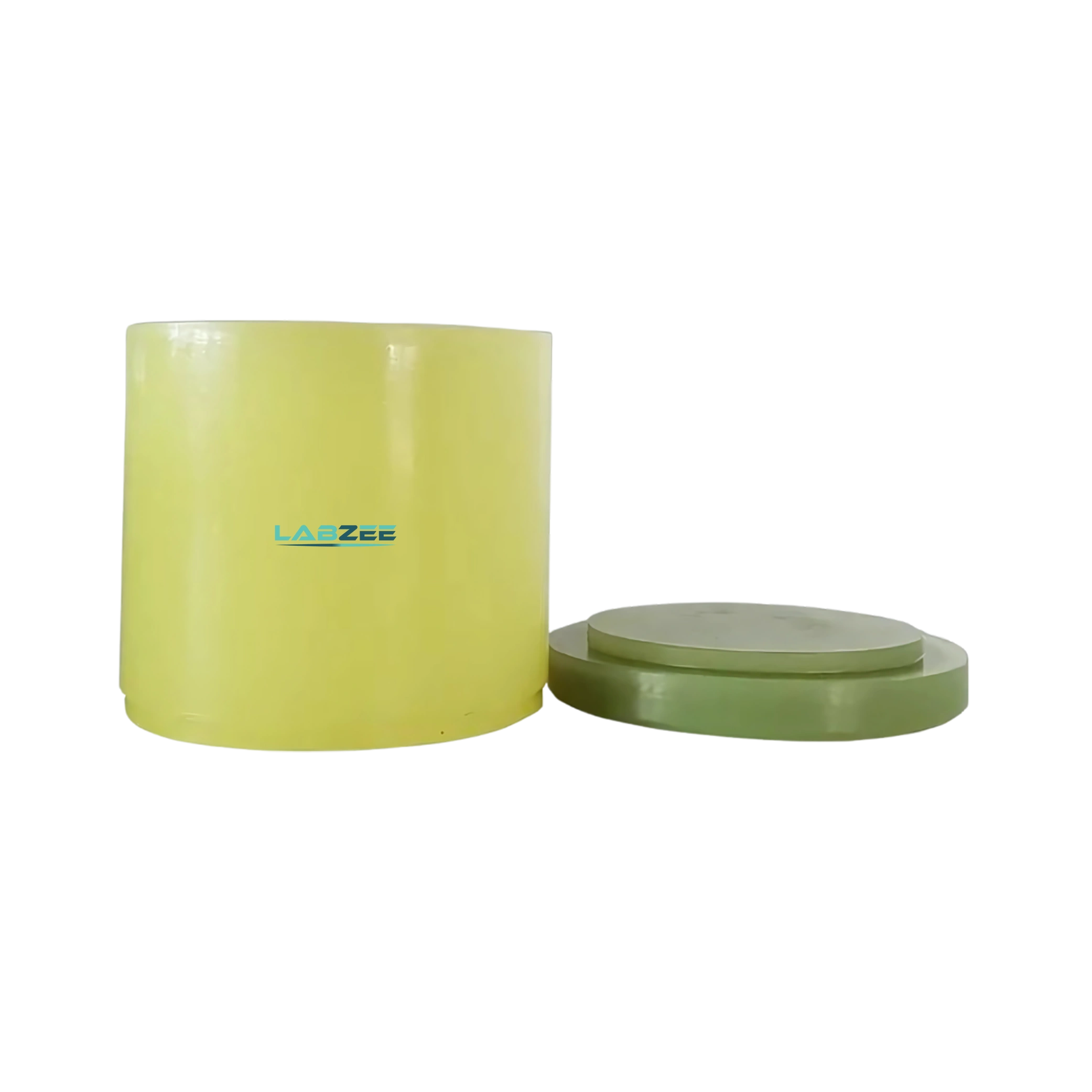


Polyurethane Ball Mill Jar BZPBJ-509 is designed for precision grinding of bulk and abrasive samples. This ball mill jar has a 10L capacity and features a flat gasket seal with a fully lined interior surface. It delivers high durability and minimal contamination during grinding processes. Its large-volume construction and impact-resistant design enhance operational efficiency. Our Polyurethane Ball Mill Jar BZPBJ-509 is ideal for sample pulverization, mechanical alloying, and slurry mixing in industrial-grade applications.
| Volume | 10 L |
| Surface Design | Lined |
| Seal Ring Type | Flat Gasket |
| Height | 275 mm |
| Wall Thickness | 11.5 mm |
| Cover Thickness | 19 mm |
| Internal Diameter | 235 mm |
| External Diameter | 258 mm |
| Bottom Diameter | 179 mm |
| Cover Weight | 3.8 Kg |
| Grinding Jar Weight | 15.9 Kg |
Our Polyurethane Ball Mill Jar BZPBJ-509 is used in large-batch mixing of mineral samples, aggressive grinding of brittle compounds, and blending of particulate suspensions in metallurgical, chemical synthesis, and composite formulation research.
Frequently Asked Questions
1: What is the volume capacity of the Polyurethane Ball Mill Jar BZPBJ-509?
The BZPBJ-509 comes with a 10-liter capacity, making it ideal for heavy-duty and large-volume milling operations across multiple sectors.
2: Can you describe the sealing mechanism of BZPBJ-509?
This ball mill jar uses a flat gasket seal that ensures a tight, leakproof closure during operation, reducing the risk of sample leakage or contamination.
3: How does the lined surface benefit the BZPBJ-509 jar?
The internal lining prevents material buildup, enhances grinding performance, and reduces contamination-especially important for sensitive sample types.
4: Is the jar suitable for continuous industrial usage?
Yes, the high wall thickness, polyurethane durability, and ergonomic design make it suitable for repeated and long-duration use in industrial settings.
5: Can you use BZPBJ-509 for slurry and suspension mixing?
Absolutely. The jar's large volume and stable sealing system make it well-suited for creating uniform slurries and mixing dense sample suspensions effectively.
6: When is a Polyurethane Ball Mill Jar best used?
A Polyurethane Ball Mill Jar is best used when low noise grinding, and abrasion resistance are essential. It is ideal for blending polymers, pigments, or other soft to mid-hardness materials. Its elasticity helps protect both the jar and milling media.
7: Can the Polyurethane Ball Mill Jar be used for wet grinding?
Yes, the Polyurethane Ball Mill Jar is suitable for both wet and dry grinding. Its sealed design prevents leaks and resists chemical exposure. Ensure the jar is properly closed for liquid-based operations.
8: Can it be used with all types of media?
The Polyurethane Ball Mill Jar is compatible with ceramic, zirconia, and stainless-steel balls. Avoid pairing it with extremely hard media that may cause excessive wear. Match the media type to your milling application.
9: When should the Polyurethane Ball Mill Jar be replaced?
Replace the Polyurethane Ball Mill Jar if it shows signs of surface wear, deformation, or cracking. Routine inspection helps maintain milling consistency. Proper care can extend its life significantly.
10: Can the Polyurethane Ball Mill Jar be cleaned easily?
Yes, the Polyurethane Ball Mill Jar has a non-stick surface that resists residue buildup. Clean it with warm water, mild solvents, or alcohol depending on your sample. Avoid harsh chemicals that may degrade the polymer.

