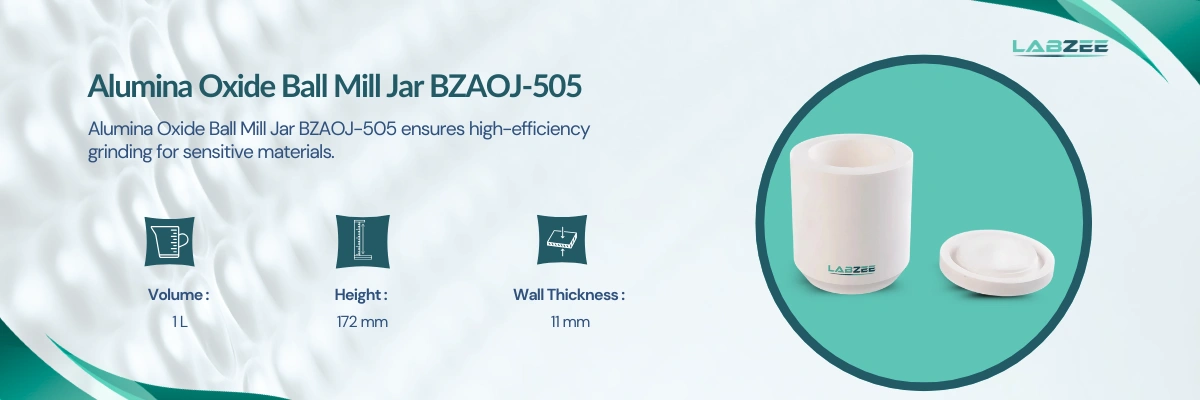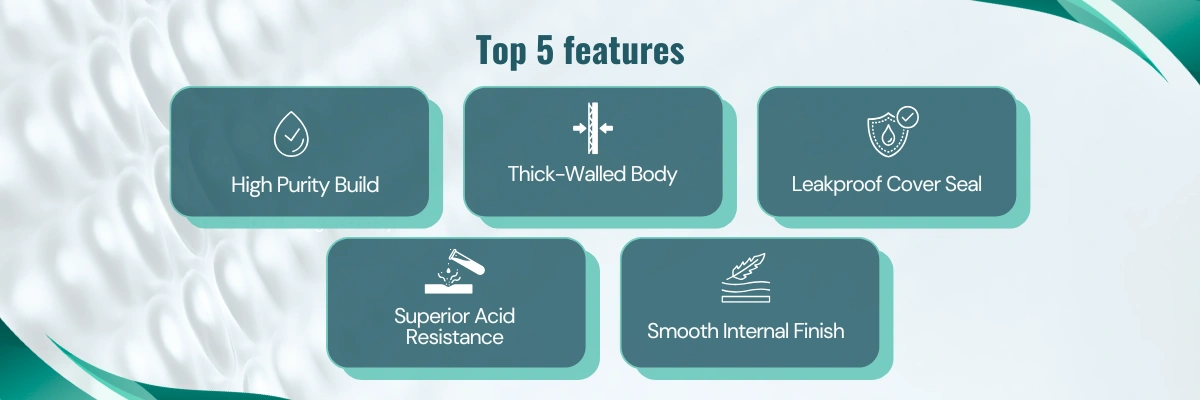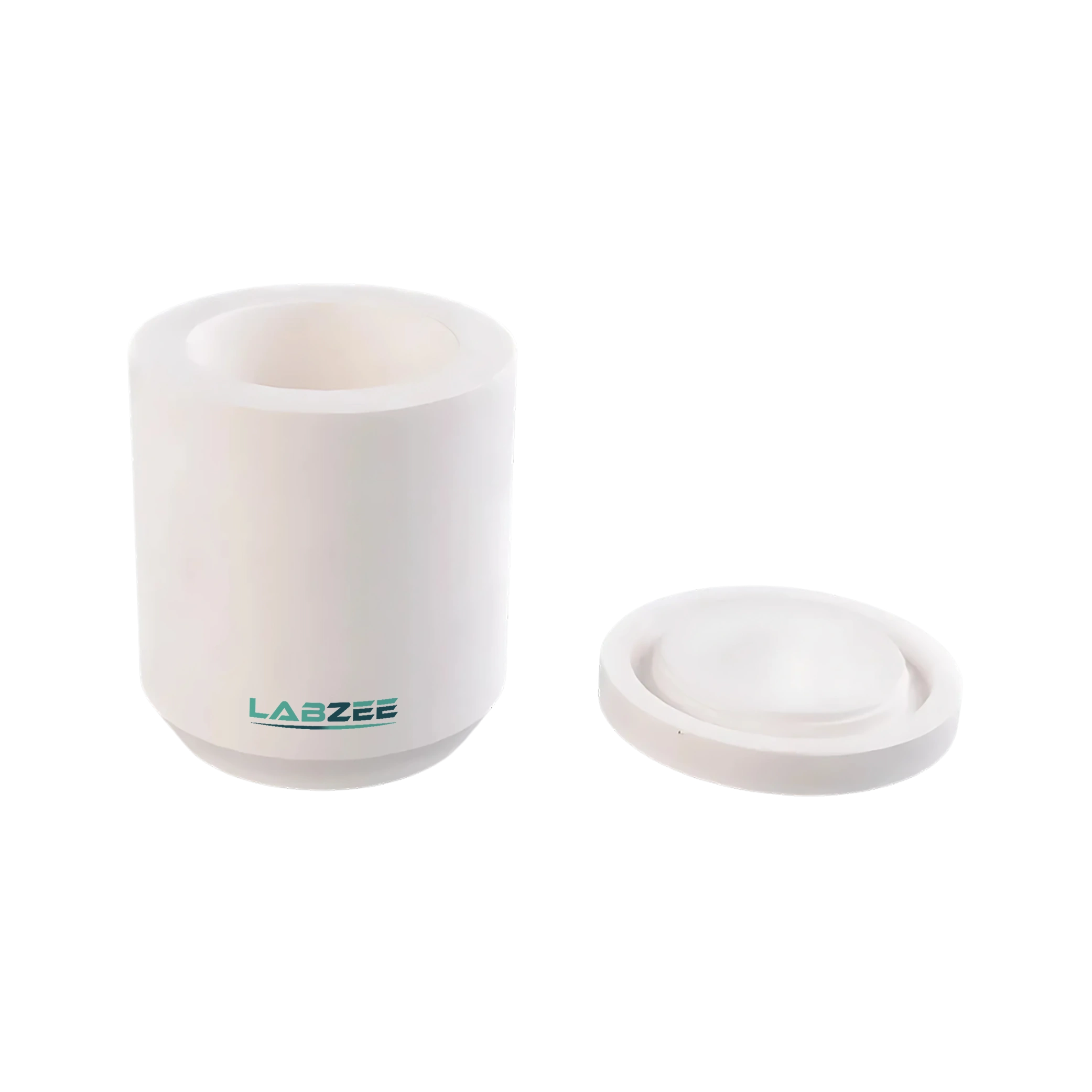
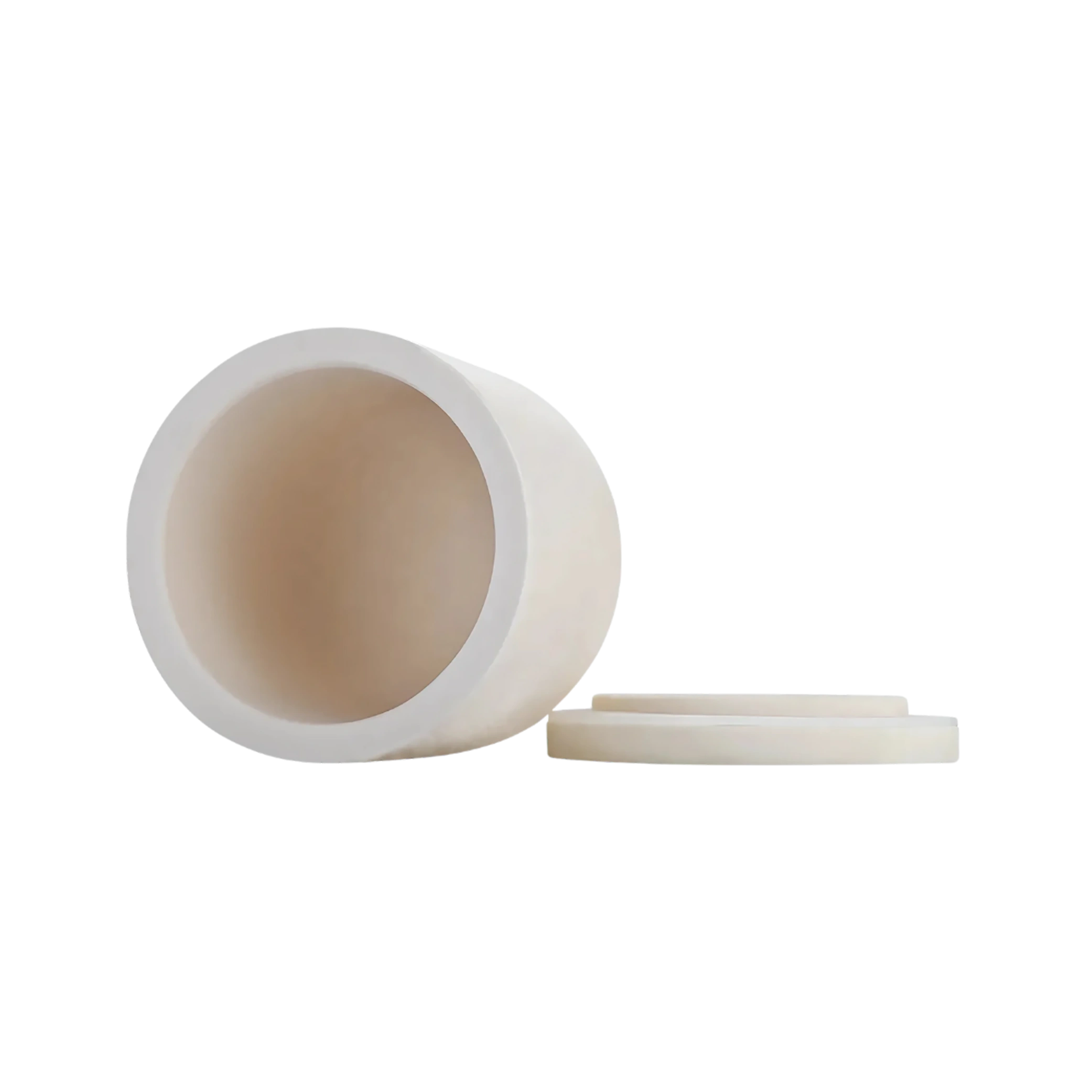
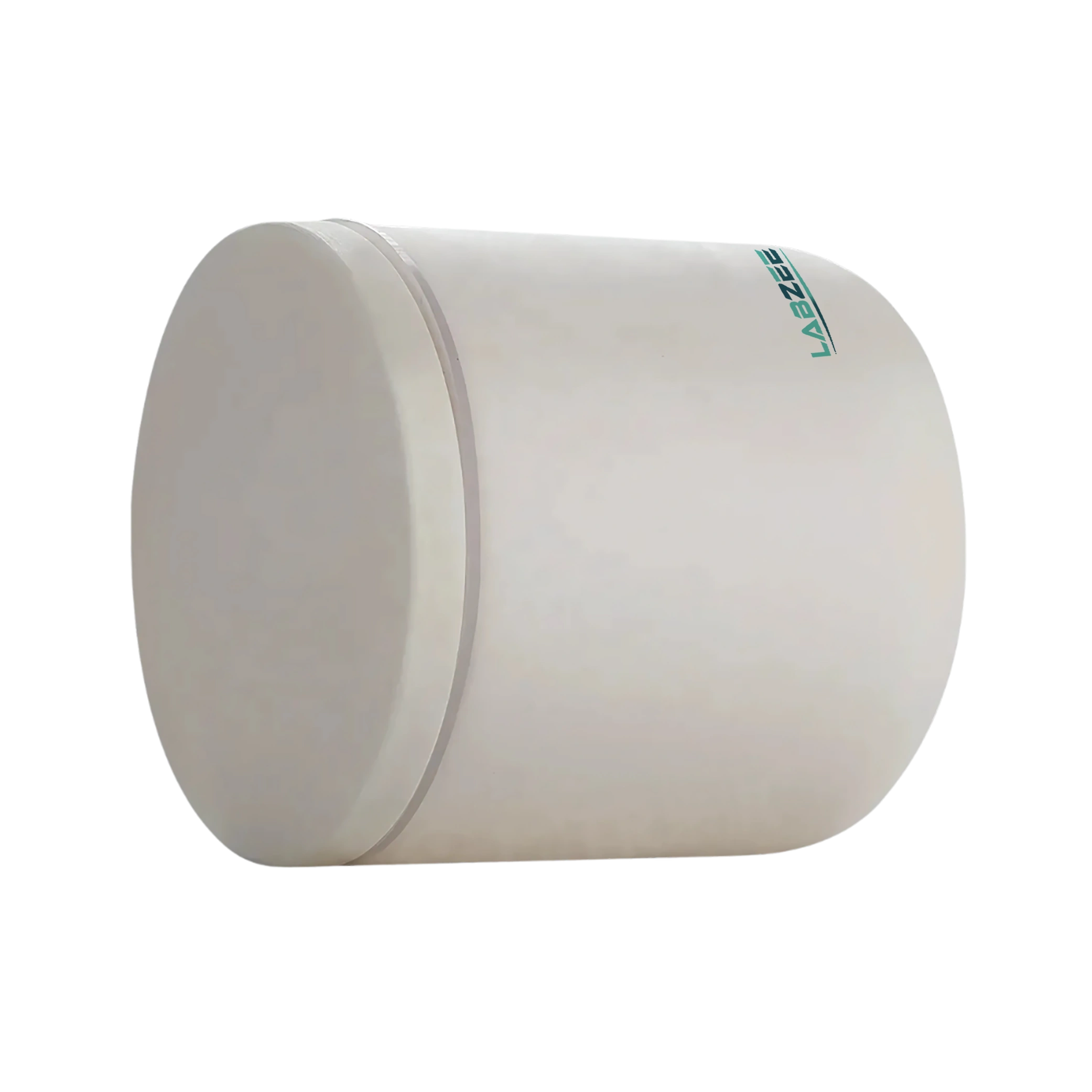
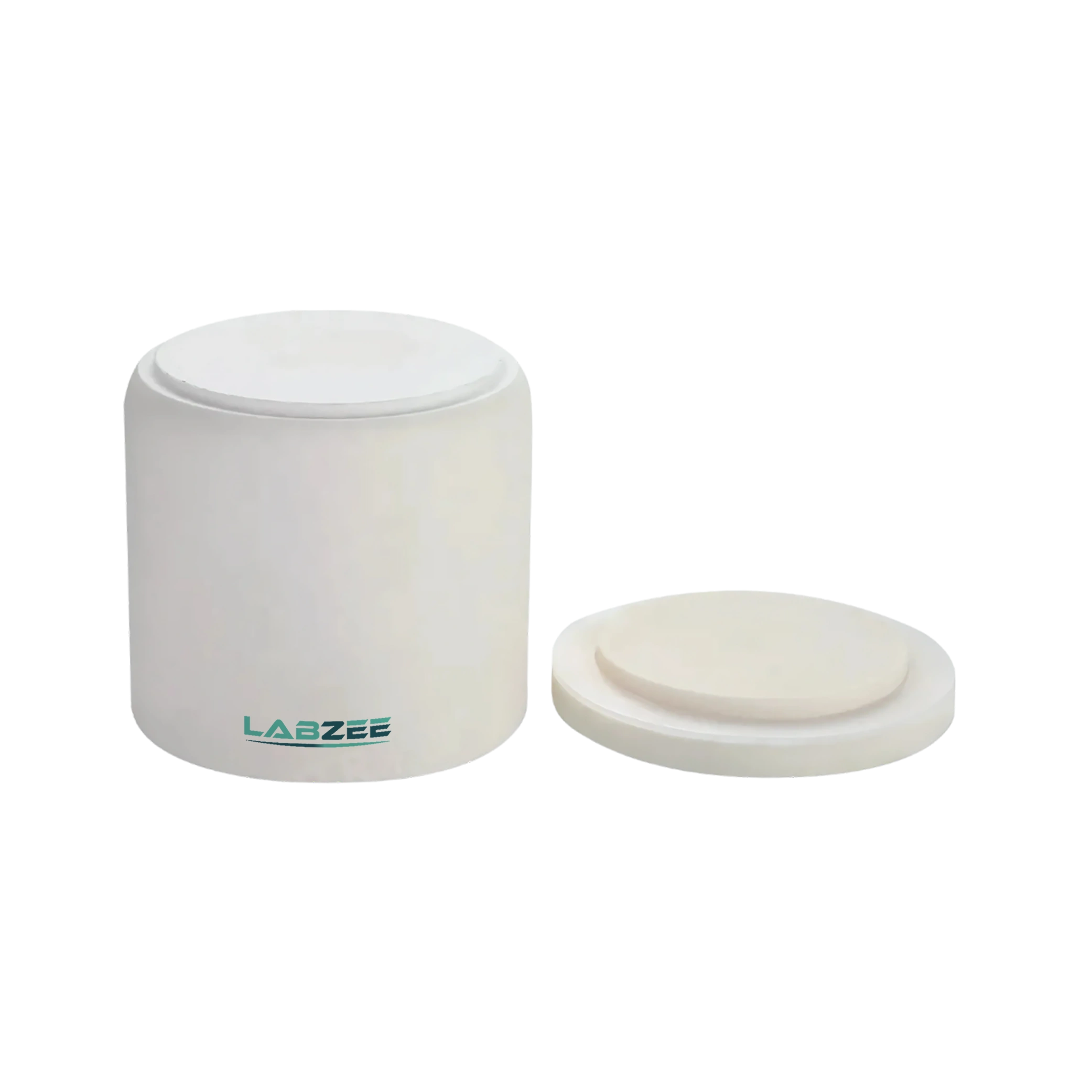
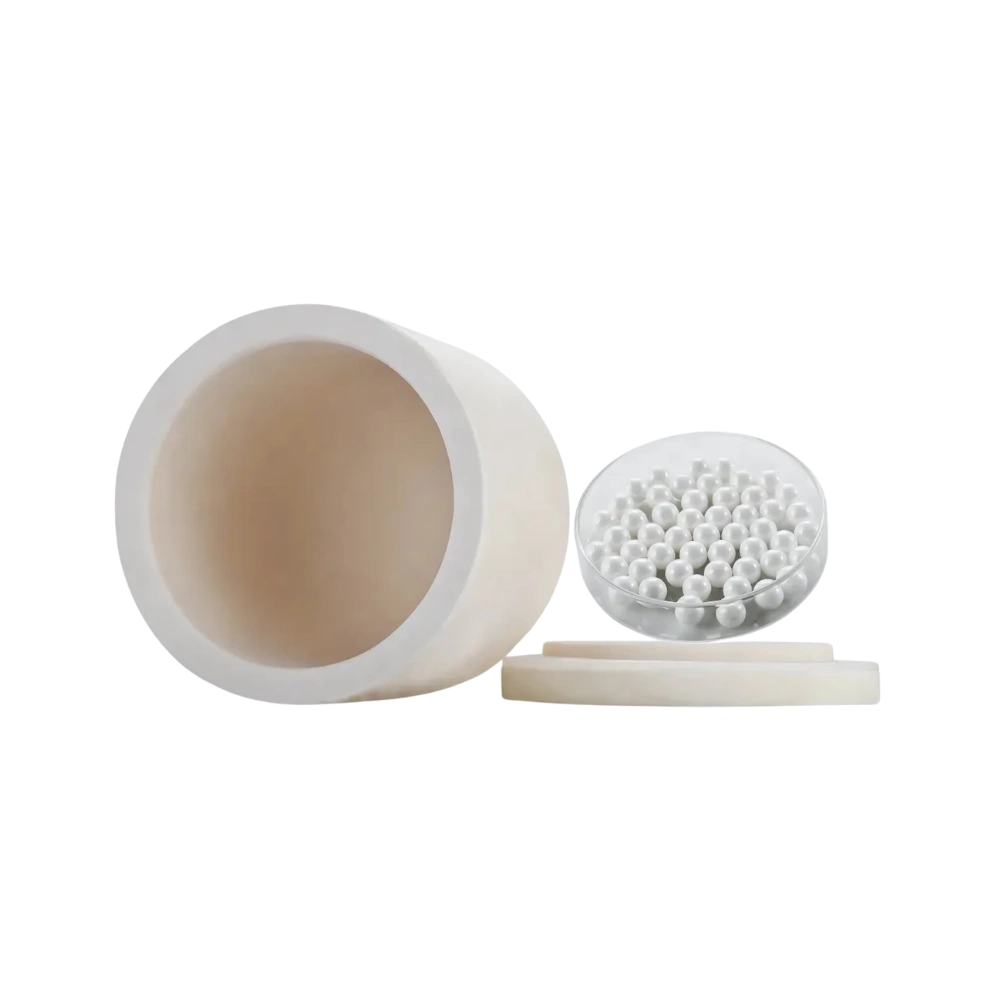
Alumina Oxide Ball Mill Jar BZAOJ-505 ensures high-efficiency grinding for sensitive materials. This ball mill jar features a 1 L volume and 10 mm thick walls for enhanced grinding durability. It is built using high-purity alumina oxide, providing excellent resistance to acids and wear. Its design includes a secure cover with flat sealing to minimize contamination and leakage. Our Alumina Oxide Ball Mill Jar BZAOJ-505 is perfect for pigment mixing, nanomaterial reduction, and ceramic powder milling.
| Volume | 1L |
| Height | 131 mm |
| Wall Thickness | 10 mm |
| Cover Thickness | 12 mm |
| Internal Diameter | 112 mm |
| External Diameter | 132 mm |
| Bottom Diameter | 115 mm |
| Grinding Jar Cover Weight | 0.73 Kg |
| Grinding Jar Wet Weight | 2.65 Kg |
Our Alumina Oxide Ball Mill Jar BZAOJ-505 is used in applications involving ceramic powder processing, pigment homogenization, nano-scale particle reduction, and grinding of corrosion-sensitive inorganic materials.
Frequently Asked Questions
1: What material is used in the BZAOJ-505 jar construction?
The BZAOJ-505 jar is made from high-purity alumina oxide, offering excellent wear and chemical resistance for sensitive grinding tasks in the lab.
2: Can you process nanomaterials in the BZAOJ-505 jar?
Yes, the jar supports nanoscale grinding applications thanks to its smooth interior and tight seal, which help maintain consistent particle size and prevent contamination.
3: Is the BZAOJ-505 suitable for corrosive substances?
Its strong acid resistance and non-reactive ceramic construction make it ideal for handling corrosive inorganic compounds during milling.
4: What type of seal does the jar use?
The BZAOJ-505 features a flat gasket seal that ensures a tight, leakproof closure, reducing spillage and maintaining internal integrity during use.
5: Which processes benefit most from this jar?
This jar is best suited for pigment blending, powder synthesis, ceramic slurry mixing, and high-purity material research in controlled environments.
6: When are Alumina Oxide Ball Mill Jars used in the lab?
Alumina Oxide Ball Mill Jars are used when contamination-free grinding is essential, especially for ceramics, electronics, and chemical research. Their non-metallic composition ensures sample purity during high-energy milling. They are ideal for grinding hard, brittle, and corrosive materials.
7: Can Alumina Oxide Ball Mill Jars be used for wet grinding?
Yes, Alumina Oxide Ball Mill Jars are suitable for both dry and wet grinding applications. Their tight-sealing lids prevent leaks during liquid milling. Always ensure the sealing ring is intact before starting a wet cycle.
8: Can different sizes of Alumina Oxide Ball Mill Jars be used on the same machine?
Yes, if the ball mill supports multi-jar configurations, various sizes of Alumina Oxide Ball Mill Jars can be mounted. Ensure that the weight and dimensions are balanced to avoid vibration. Always refer to the mill’s compatibility chart.
9: When should Alumina Oxide Ball Mill Jars be replaced?
Alumina Oxide Ball Mill Jars should be replaced when you notice cracking, internal chipping, or a drop in grinding performance. Regular visual inspection helps detect early signs of wear. Worn jars can contaminate sensitive samples.
10: Can Alumina Oxide Ball Mill Jars be cleaned easily?
Yes, Alumina Oxide Ball Mill Jars have a dense, non-porous interior that resists residue buildup. They can be cleaned using water, alcohol, or mild lab-grade solvents. Avoid using metallic brushes that may scratch the surface.