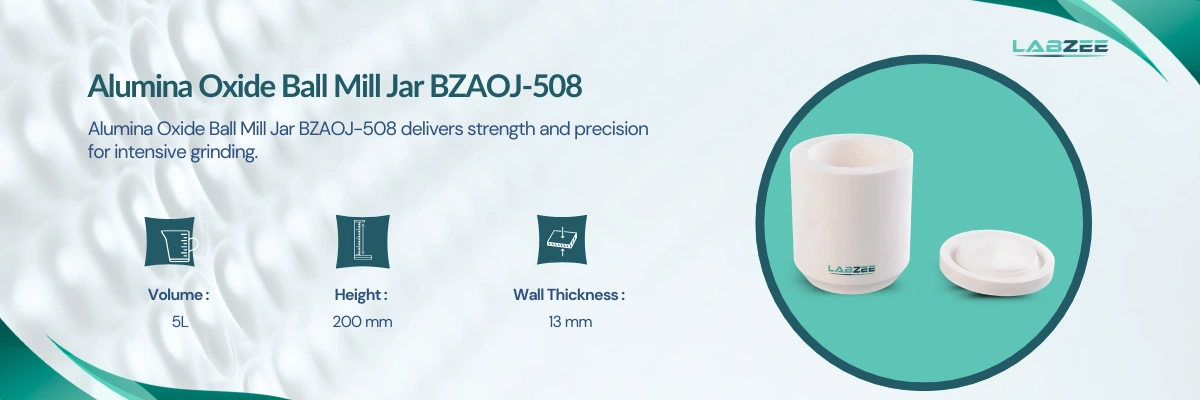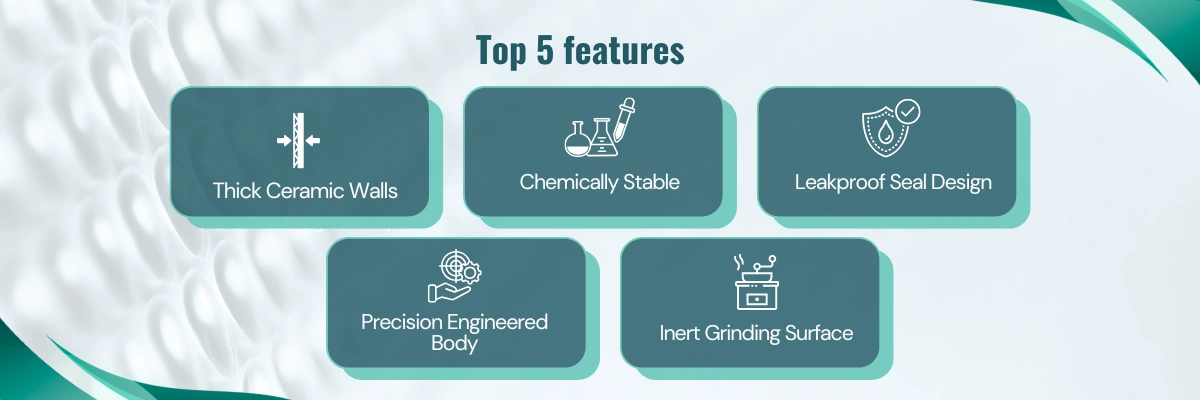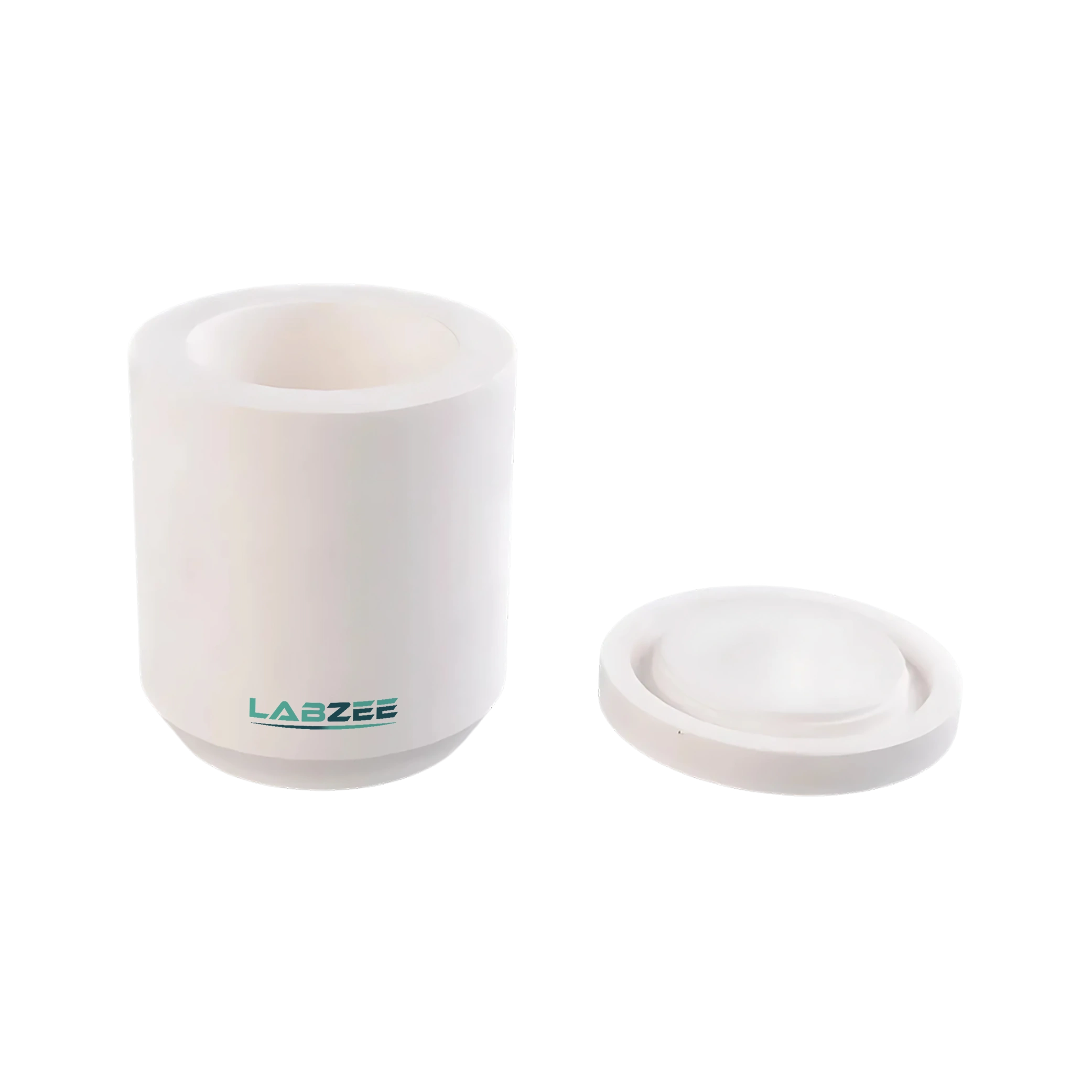
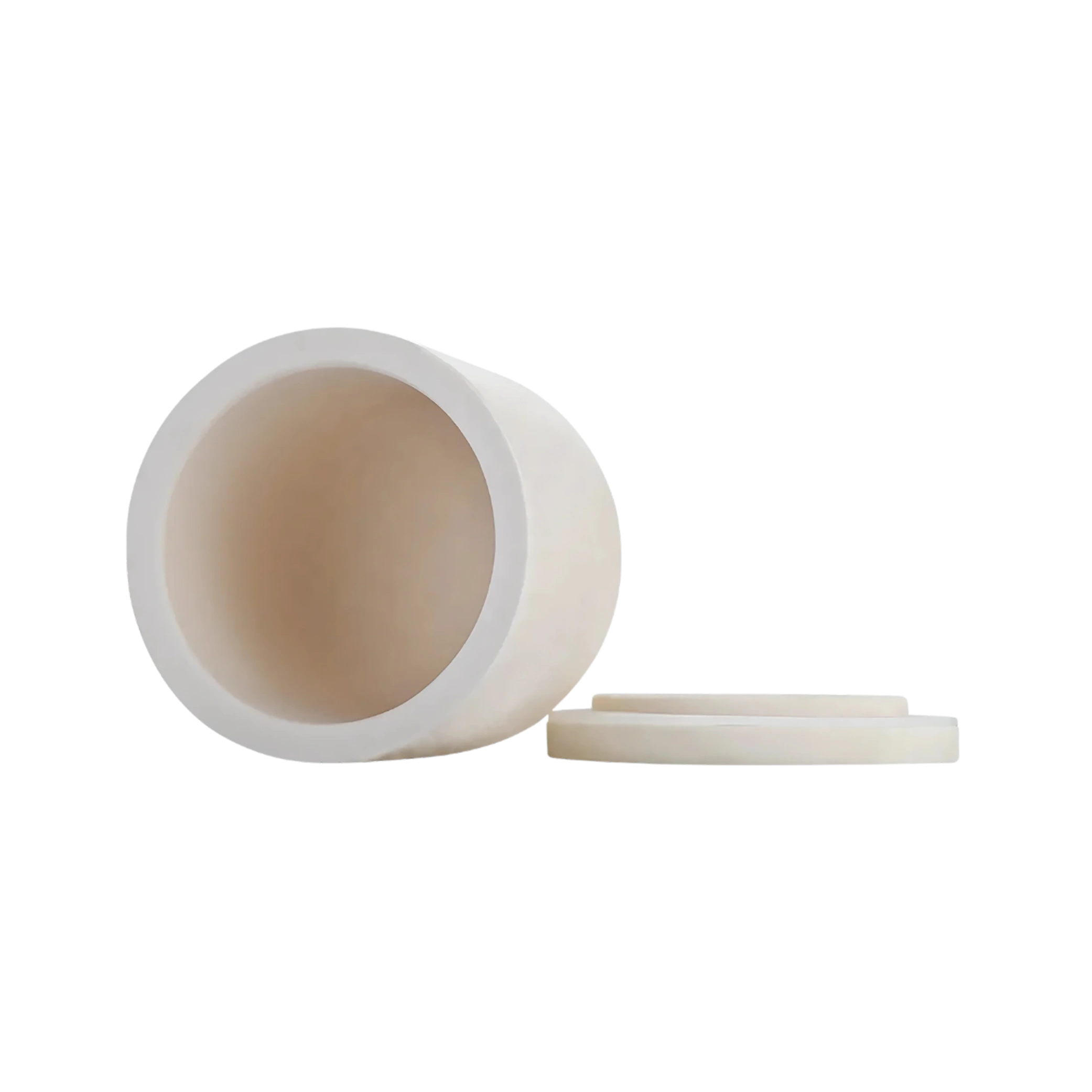
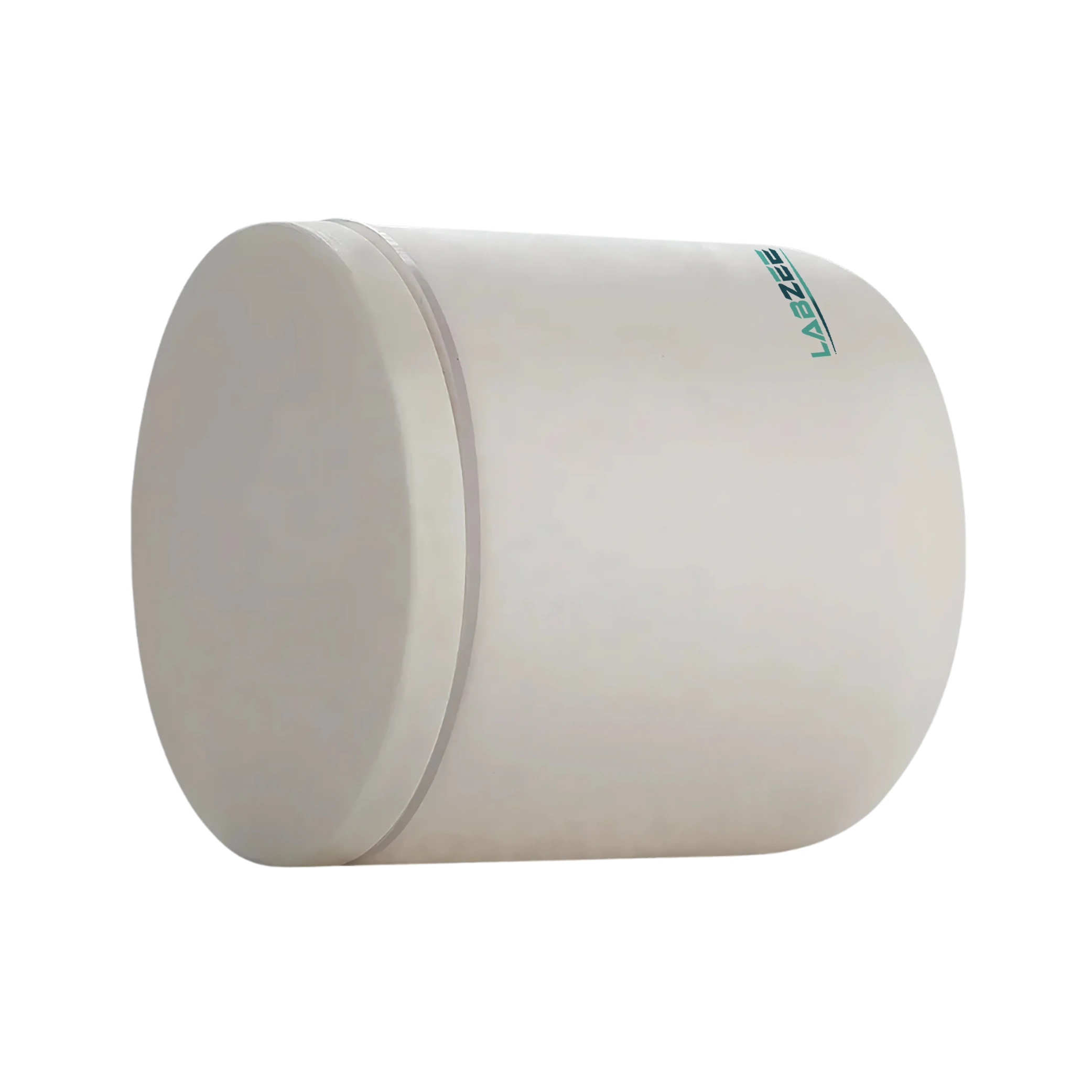
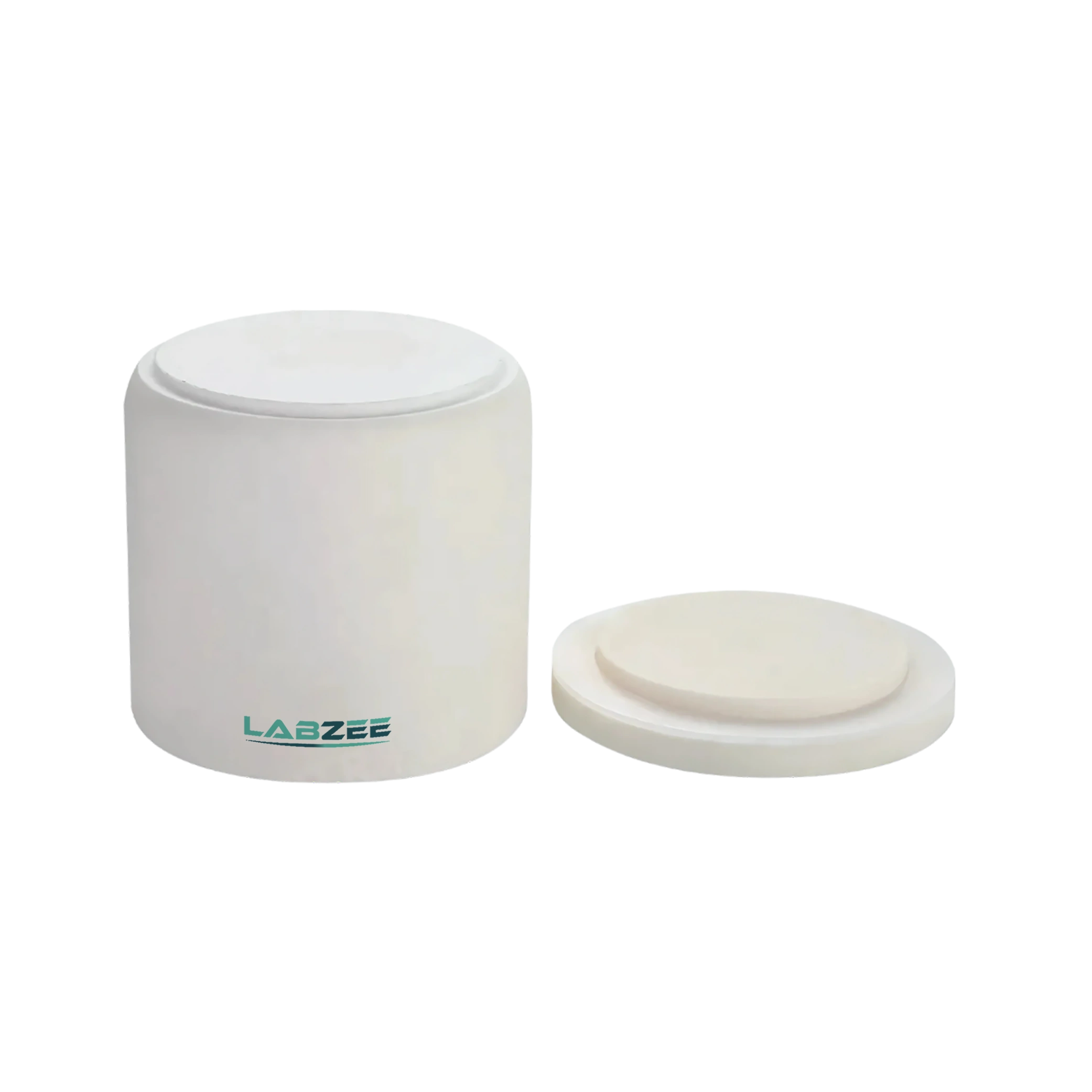
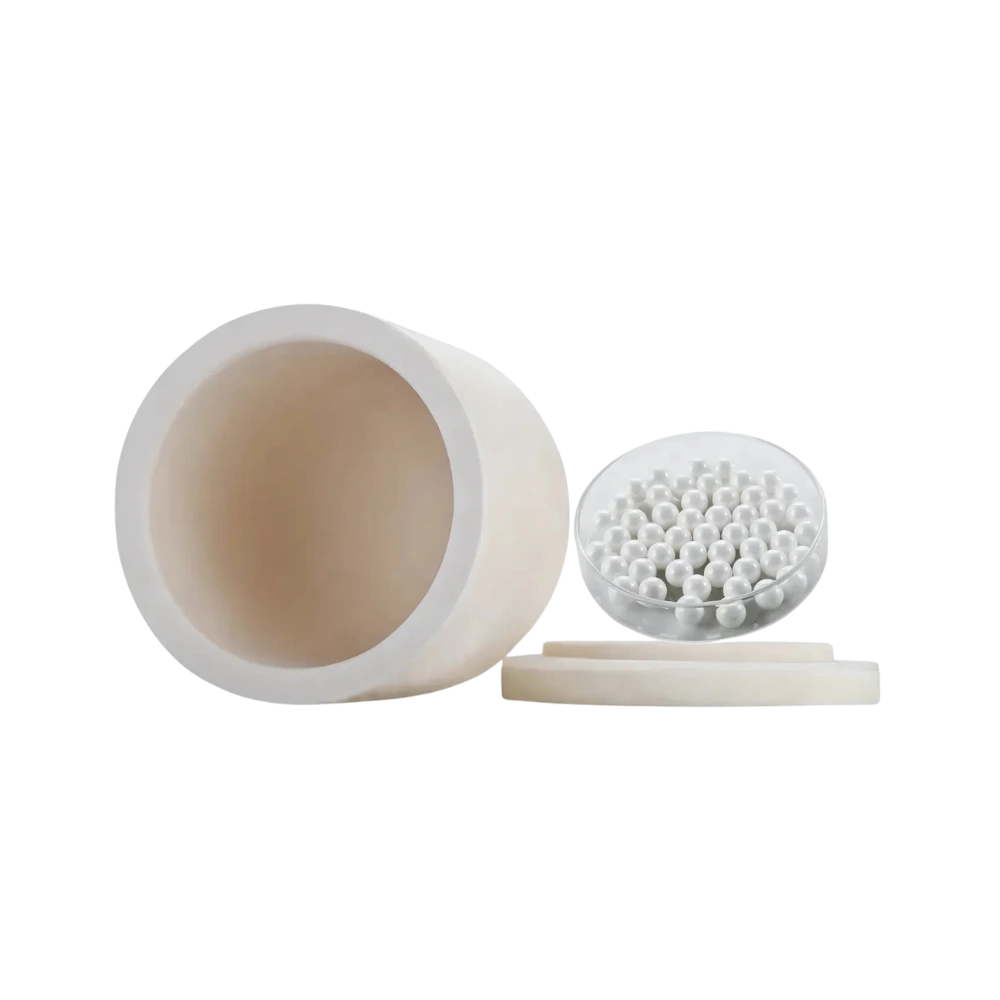
Alumina Oxide Ball Mill Jar BZAOJ-508 delivers strength and precision for intensive grinding. This ball mill jar features a 5 L volume and 13 mm wall thickness to support demanding milling loads. It is crafted from chemically stable alumina oxide for optimal durability and minimal contamination. Its flat gasket seal ensures secure closure, while the thick-walled design prevents fracture or leakage. Our Alumina Oxide Ball Mill Jar BZAOJ-508 is ideal for high-load ceramic processing, dispersion of technical powders, and contamination-free mixing.
| Volume | 5L |
| Seal Ring Type | Flat Gasket |
| Wall Thickness | 13 mm |
| Cover Thickness | 15 mm |
| Internal Diameter | 174 mm |
| External Diameter | 200 mm |
| Bottom Diameter | 195 mm |
| Height | 200 mm |
| Grinding Jar Cover Weight | 2.1 Kg |
| Grinding Jar Wet Weight | 10.25 Kg |
Our Alumina Oxide Ball Mill Jar BZAOJ-508 is widely used in heavy-duty powder grinding, ceramic glaze formulation, composite slurry mixing, abrasive material dispersion, and heat-resistant pigment processing.
Frequently Asked Questions
1: What is the construction material of BZAOJ-508?
The BZAOJ-508 jar is manufactured from pure alumina oxide, offering exceptional mechanical and chemical stability for high-intensity grinding.
2: Can you safely use BZAOJ-508 for high-purity grinding?
Yes, BZAOJ-508 is designed with a non-reactive surface, ensuring minimal contamination, making it highly suitable for precision material grinding.
3: How effective is the seal on BZAOJ-508?
This model uses a flat gasket seal which provides a tight and secure closure, preventing sample leakage and maintaining internal consistency during grinding.
4: Is BZAOJ-508 suitable for abrasive material processing?
Absolutely, its thick 13 mm ceramic wall and impact-resistant design support heavy abrasive loads without structural compromise.
5: Where is BZAOJ-508 typically used?
The jar is frequently applied in advanced ceramic development, pigment dispersion, electronics-grade powder mixing, and technical composite grinding applications.
6: When are Alumina Oxide Ball Mill Jars used in the lab?
Alumina Oxide Ball Mill Jars are used when contamination-free grinding is essential, especially for ceramics, electronics, and chemical research. Their non-metallic composition ensures sample purity during high-energy milling. They are ideal for grinding hard, brittle, and corrosive materials.
7: Can Alumina Oxide Ball Mill Jars be used for wet grinding?
Yes, Alumina Oxide Ball Mill Jars are suitable for both dry and wet grinding applications. Their tight-sealing lids prevent leaks during liquid milling. Always ensure the sealing ring is intact before starting a wet cycle.
8: Can different sizes of Alumina Oxide Ball Mill Jars be used on the same machine?
Yes, if the ball mill supports multi-jar configurations, various sizes of Alumina Oxide Ball Mill Jars can be mounted. Ensure that the weight and dimensions are balanced to avoid vibration. Always refer to the mill’s compatibility chart.
9: When should Alumina Oxide Ball Mill Jars be replaced?
Alumina Oxide Ball Mill Jars should be replaced when you notice cracking, internal chipping, or a drop in grinding performance. Regular visual inspection helps detect early signs of wear. Worn jars can contaminate sensitive samples.
10: Can Alumina Oxide Ball Mill Jars be cleaned easily?
Yes, Alumina Oxide Ball Mill Jars have a dense, non-porous interior that resists residue buildup. They can be cleaned using water, alcohol, or mild lab-grade solvents. Avoid using metallic brushes that may scratch the surface.