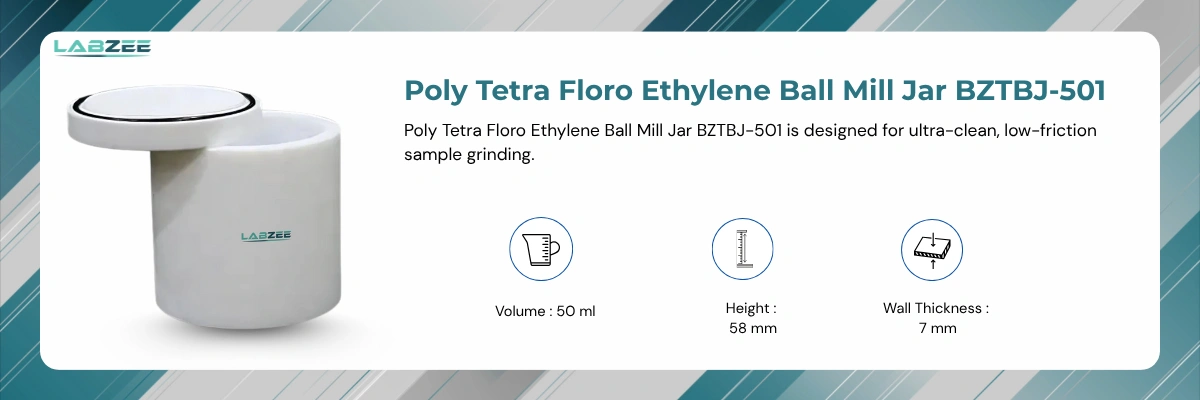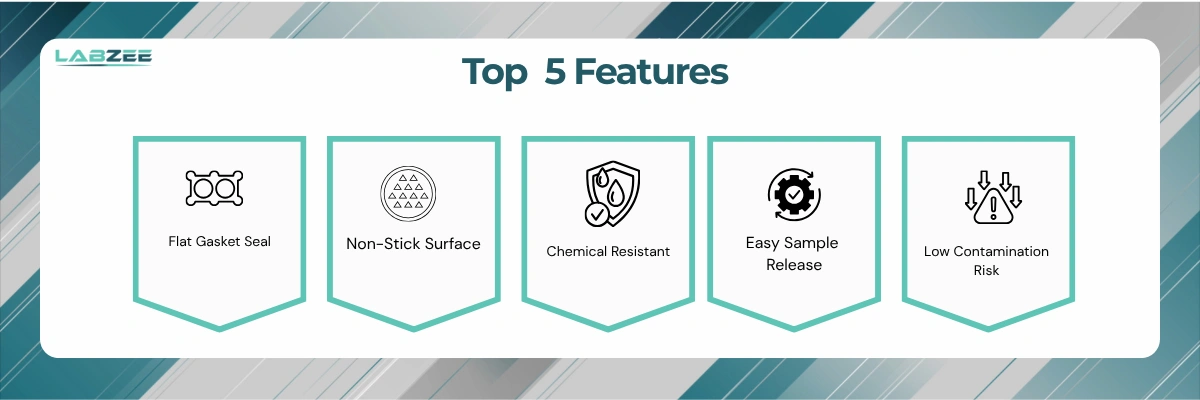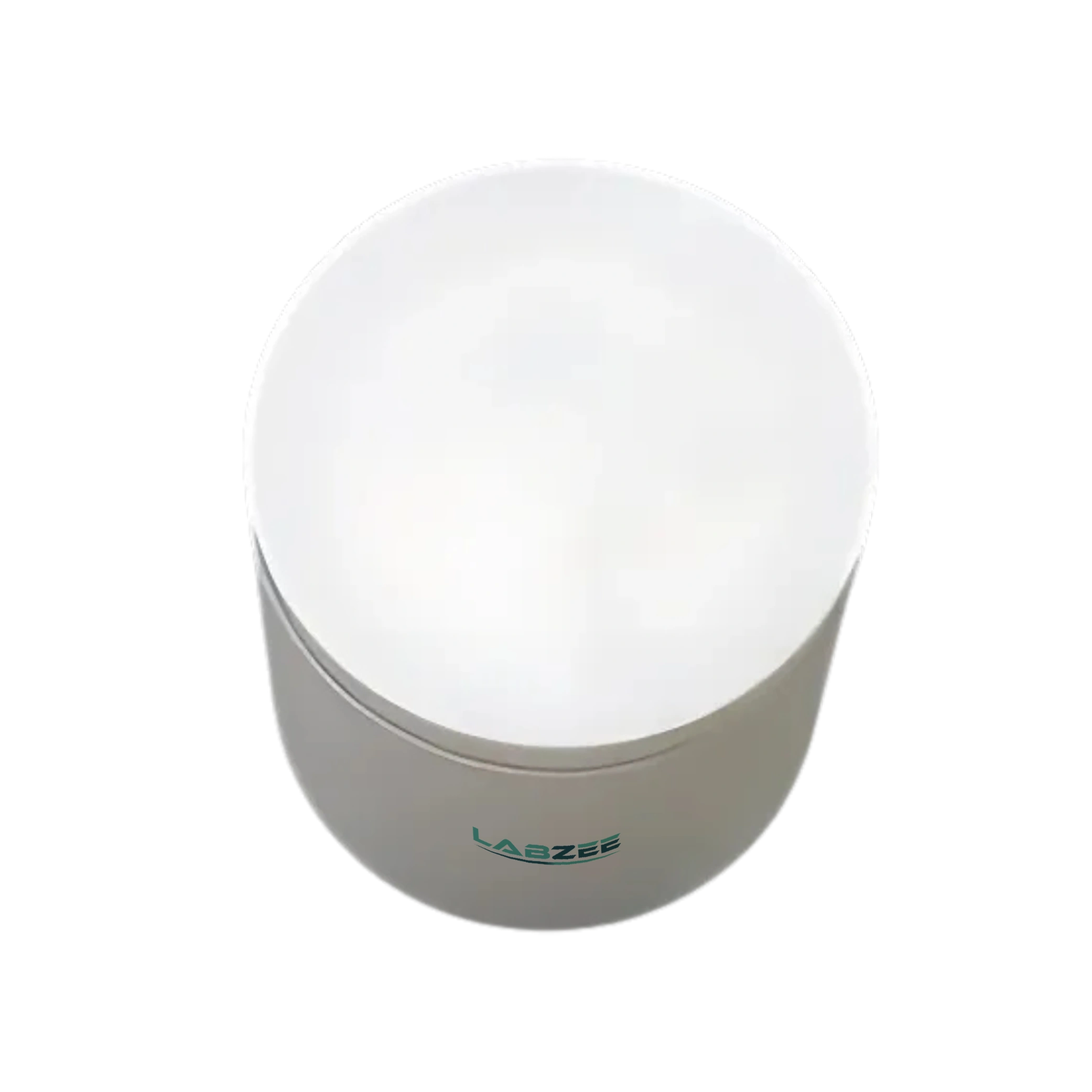


Poly Tetra Floro Ethylene Ball Mill Jar BZTBJ-501 is designed for ultra-clean, low-friction sample grinding. This ball mill jar features a 50 ml capacity with a flat gasket seal and robust PTFE construction. It offers exceptional chemical resistance and non-stick performance, making it suitable for reactive compounds. Its smooth interior enhances sample retrieval and reduces residue buildup during wet or dry milling. Our Poly Tetra Floro Ethylene Ball Mill Jar BZTBJ-501 is ideal for high-purity reagent preparation, corrosive material grinding, and organic compound dispersion.
| Volume | 50 ml |
| Seal Ring Type | Flat Gasket |
| Height | 58 mm |
| Wall Thickness | 7 mm |
| Cover Thickness | 14 mm |
| Internal Diameter | 50 mm |
| External Diameter | 64 mm |
| Bottom Diameter | 64 mm |
| Cover Weight | 0.082 Kg |
| Grinding Jar Weight | 0.251 Kg |
Our Poly Tetra Floro Ethylene Ball Mill Jar BZTBJ-501 is used for sensitive substance grinding, hazardous compound milling, moisture-free sample mixing, organic synthesis material handling, and corrosive chemical dispersion in analytical laboratories and controlled research environments
Frequently Asked Questions
1: What are the primary benefits of using BZTBJ-501 in labs?
Its PTFE build ensures low contamination, high chemical resistance, and safe grinding of sensitive materials, making it highly suitable for precision applications.
2: Can you use BZTBJ-501 with strong acids or alkalis?
Yes, this jar’s material composition is compatible with highly reactive chemicals without degrading or leaching compounds.
3: How does the BZTBJ-501 minimize sample loss?
Its non-stick surface prevents material from adhering to the walls, making sample recovery efficient and residue-free.
4: Is BZTBJ-501 compatible with common laboratory ball mills?
Yes, it fits standard milling systems used in research setups, ensuring seamless integration with minimal adjustments.
5: Does the PTFE material of BZTBJ-501 affect milling speed?
While PTFE jars reduce friction, they are ideal for controlled-speed grinding where purity is prioritized over high-speed processing.
6: When is a Poly Tetra Floro Ethylene Ball Mill Jar most suitable?
A Poly Tetra Floro Ethylene Ball Mill Jar is ideal when working with highly reactive, corrosive, or ultra-sensitive materials. Its non-reactive surface prevents contamination and preserves sample purity. It is frequently used in pharmaceutical, chemical, and environmental labs.
7: Can the Poly Tetra Floro Ethylene Ball Mill Jar be used for wet grinding?
Yes, the Poly Tetra Floro Ethylene Ball Mill Jar can handle both wet and dry milling. Its hydrophobic surface minimizes sticking during wet grinding. Always ensure proper sealing before use with liquids.
8: Can metallic media be used in the Poly Tetra Floro Ethylene Ball Mill Jar?
It is recommended to use ceramic or polymer-based media with the Poly Tetra Floro Ethylene Ball Mill Jar. Metallic media may damage the soft PTFE surface and reduce performance. Always select media based on sample type and required purity.
9: When should the Poly Tetra Floro Ethylene Ball Mill Jar be replaced?
The Poly Tetra Floro Ethylene Ball Mill Jar should be replaced if it shows deformation, deep scratches, or wear. Despite its chemical resistance, it can wear over time under abrasive conditions. Regular inspection ensures contamination-free results.
10: Can the Poly Tetra Floro Ethylene Ball Mill Jar be cleaned easily?
Yes, the Poly Tetra Floro Ethylene Ball Mill Jar is exceptionally easy to clean due to its non-stick surface. Use mild detergents or lab-grade solvents depending on the residue. Avoid harsh abrasives that may scratch the inner surface.